Soldiers’ Sidekicks – Military Working Dogs in Training and Deployment
Dogs possess extraordinary sensory abilities—especially when it comes to smell and hearing—that far surpass human capabilities. Their sense of smell is tens of thousands of times more sensitive than ours, enabling them to detect explosives, drugs, and even human emotions. They can also hear higher frequencies and pick up sounds from much farther away.
Some dogs are even believed to sense subtle changes in barometric pressure or electromagnetic fields, hinting at a deeper sensitivity to environmental changes. Because of these remarkable traits, the military trains and deploys them as elite partners known as Military Working Dogs (MWDs).
These are just some of the powerful moments shared between soldiers and their MWDs as they train and deploy together.
Jump! – A Marine and His K9 in Action

In the picture, U.S. Marine Corps Lance Cpl. Paxton Raypierpoint, a military working dog handler with Headquarters and Headquarters Squadron at Marine Corps Air Station Miramar, guides MWD Many through an obstacle course during a demonstration for Junior Reserve Officers’ Training Corps cadets at MCAS Miramar, California, on June 4, 2025. The K9 unit supports law enforcement, investigations, and base security through the use of highly trained military working dogs.
Air Force K9 Unit Sharpens Skills
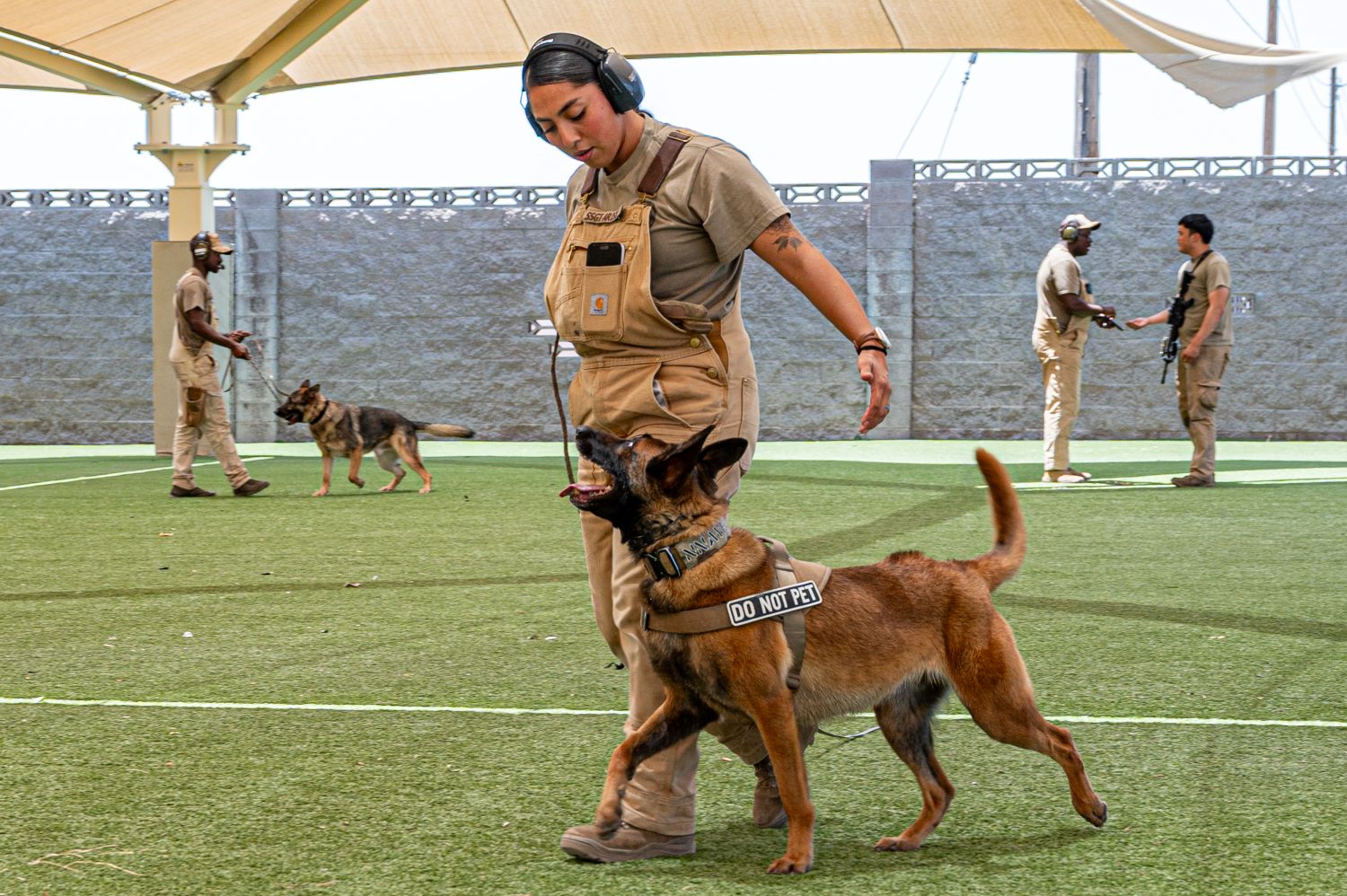
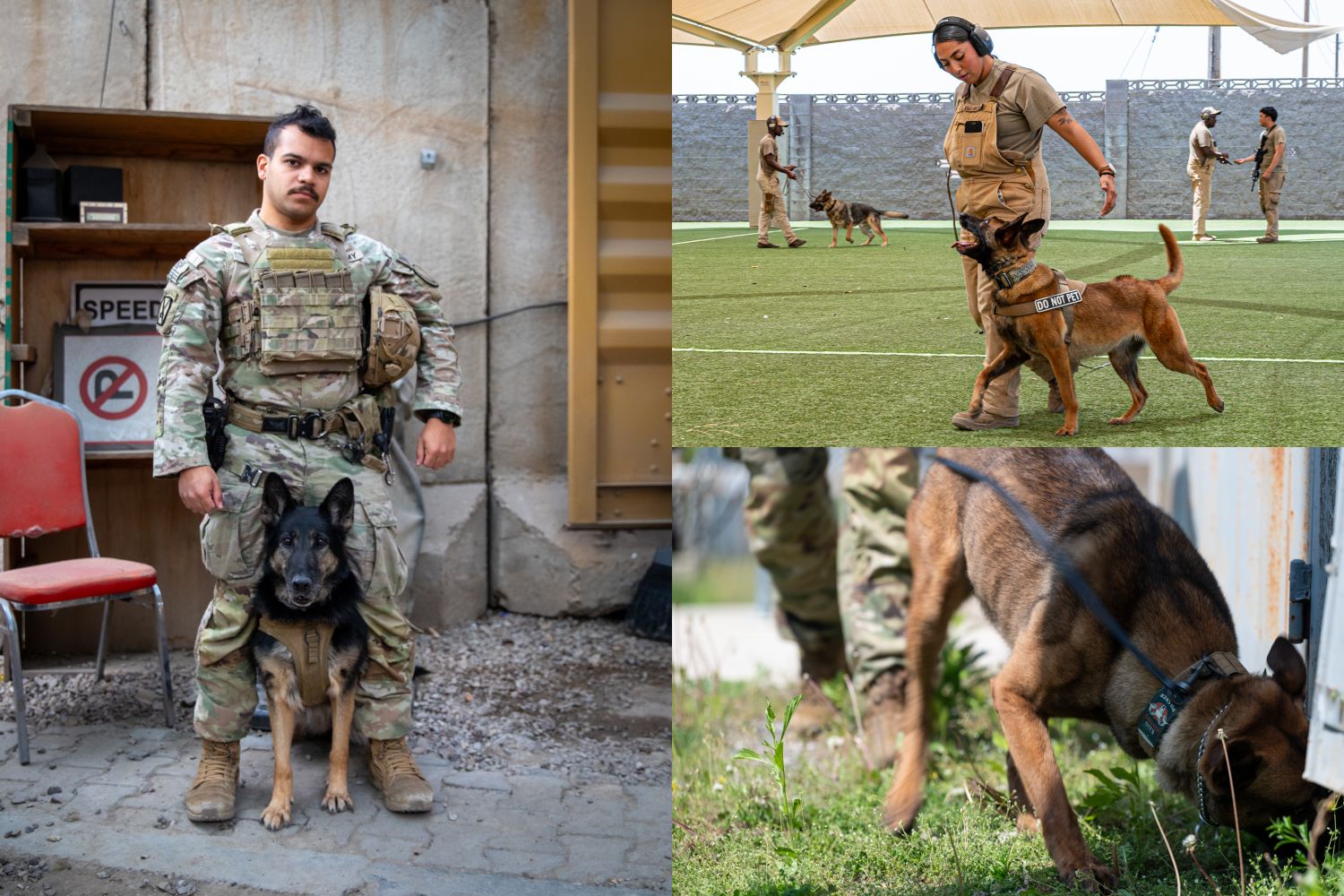
U.S. Air Force Staff Sgt. Yarithza Arista, a handler with the 99th Security Forces Squadron, conducts an obedience drill with military working dog Nnayeli at Nellis Air Force Base, Nevada, June 25, 2025. These MWD teams routinely train to ensure they are prepared for patrol duties, detection missions, and emergency response scenarios.
MWD Edy Ends Service with a Smile
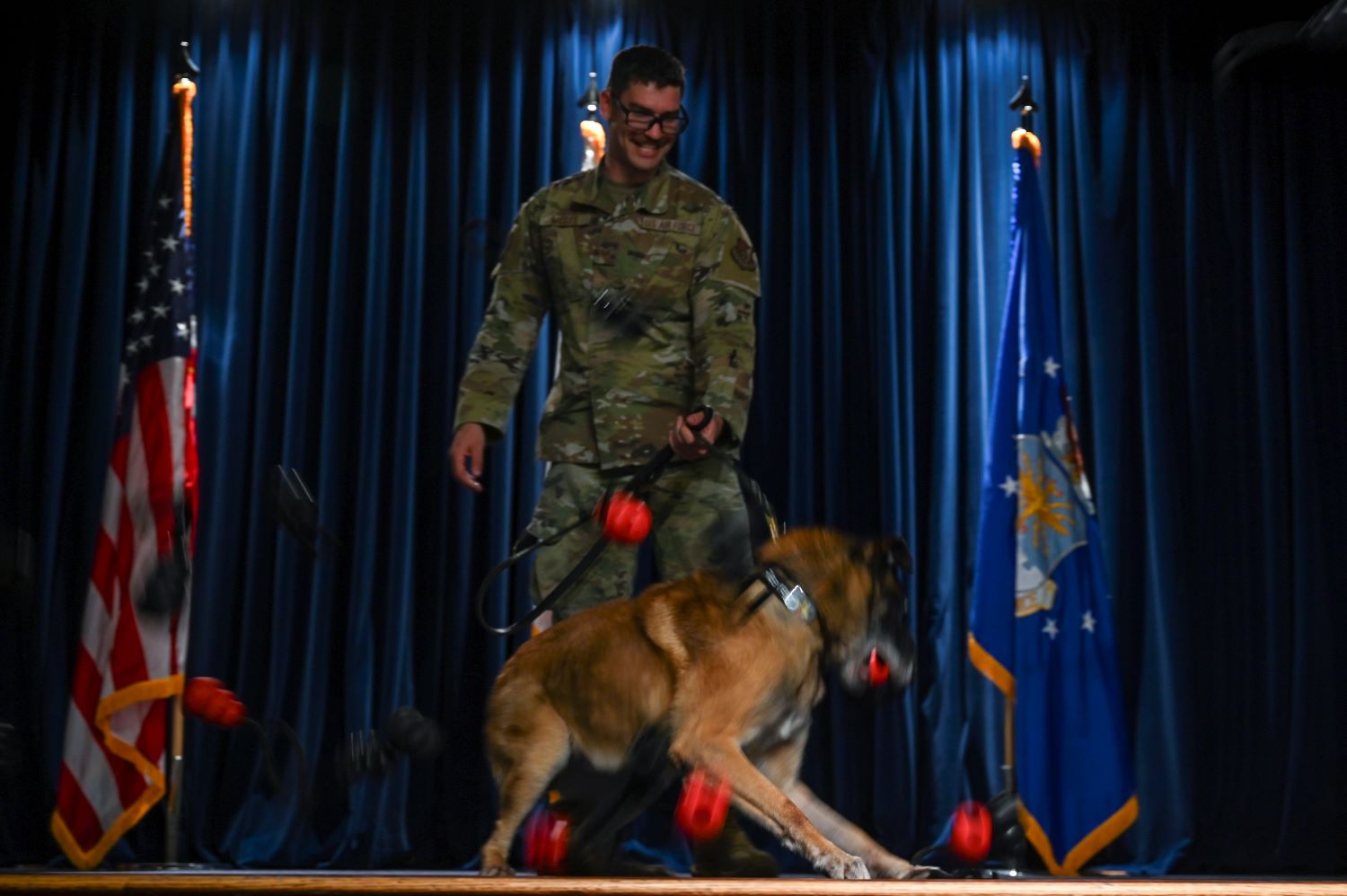
Military working dogs will eventually reach the end of their service, and when that time comes, their dedication is honored with a special ceremony. On June 5, 2025, at Yokota Air Base, Japan, U.S. Air Force Staff Sgt. Ian McGee, a handler with the 374th Security Forces Squadron, held MWD Edy on a leash as fellow handlers tossed dog toys to celebrate Edy’s retirement—a tradition marking the conclusion of a K9’s military career.
Strong Grip!
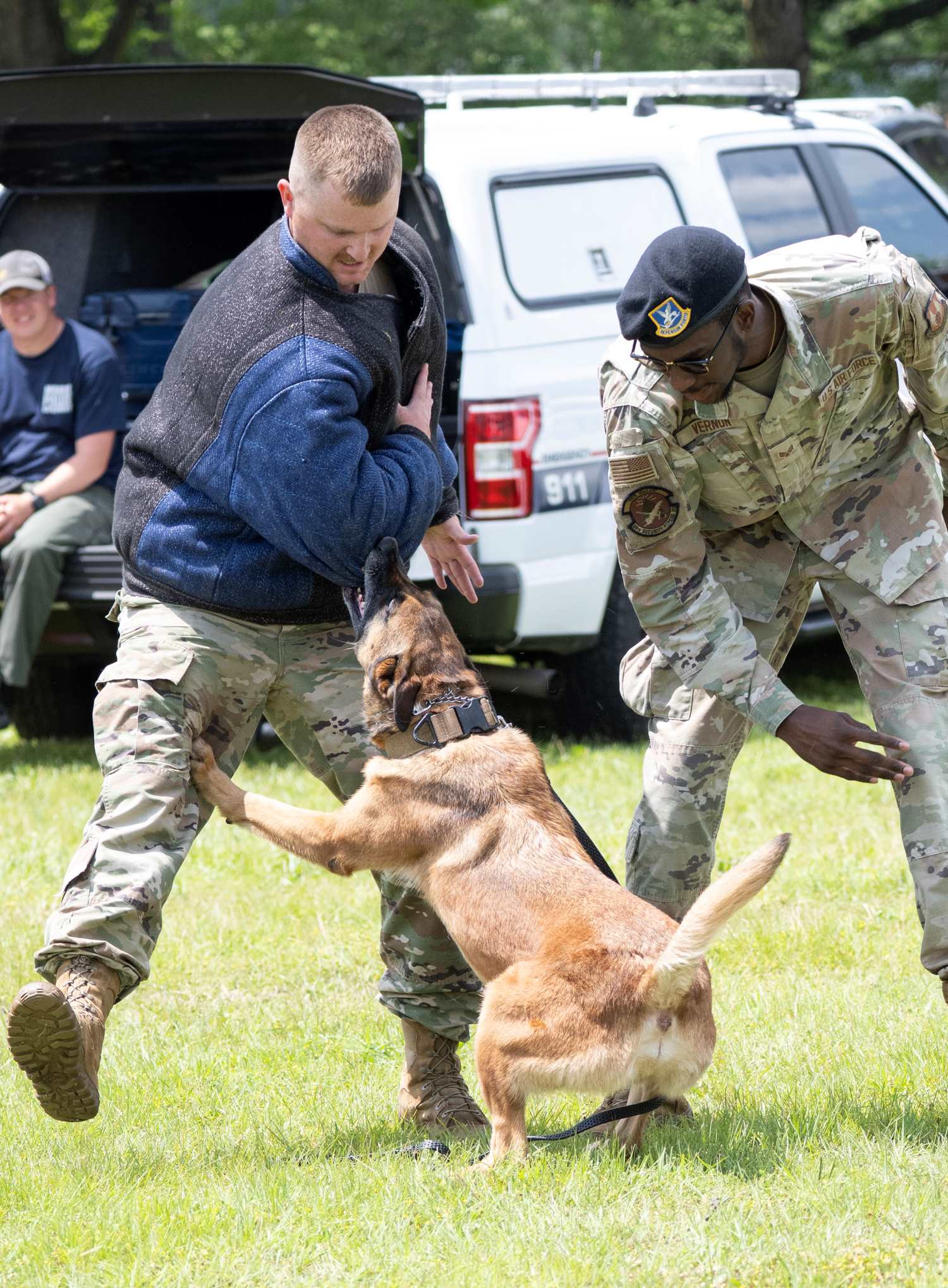
On May 15, 2025, Senior Airman Henry Vernon, right, a handler with the 88th Security Forces Squadron, and MWD Bulit showcased suspect apprehension techniques ahead of the National Police Week K-9 competition at Wright-Patterson Air Force Base, Ohio. Staff Sgt. Zackery Leist, also with the 88 SFS, portrayed the suspect during the demonstration. Hosted by the 88 SFS, the event tested the capabilities and teamwork of K-9 units from various local law enforcement agencies.
A MWD’s First Ride in the Sky
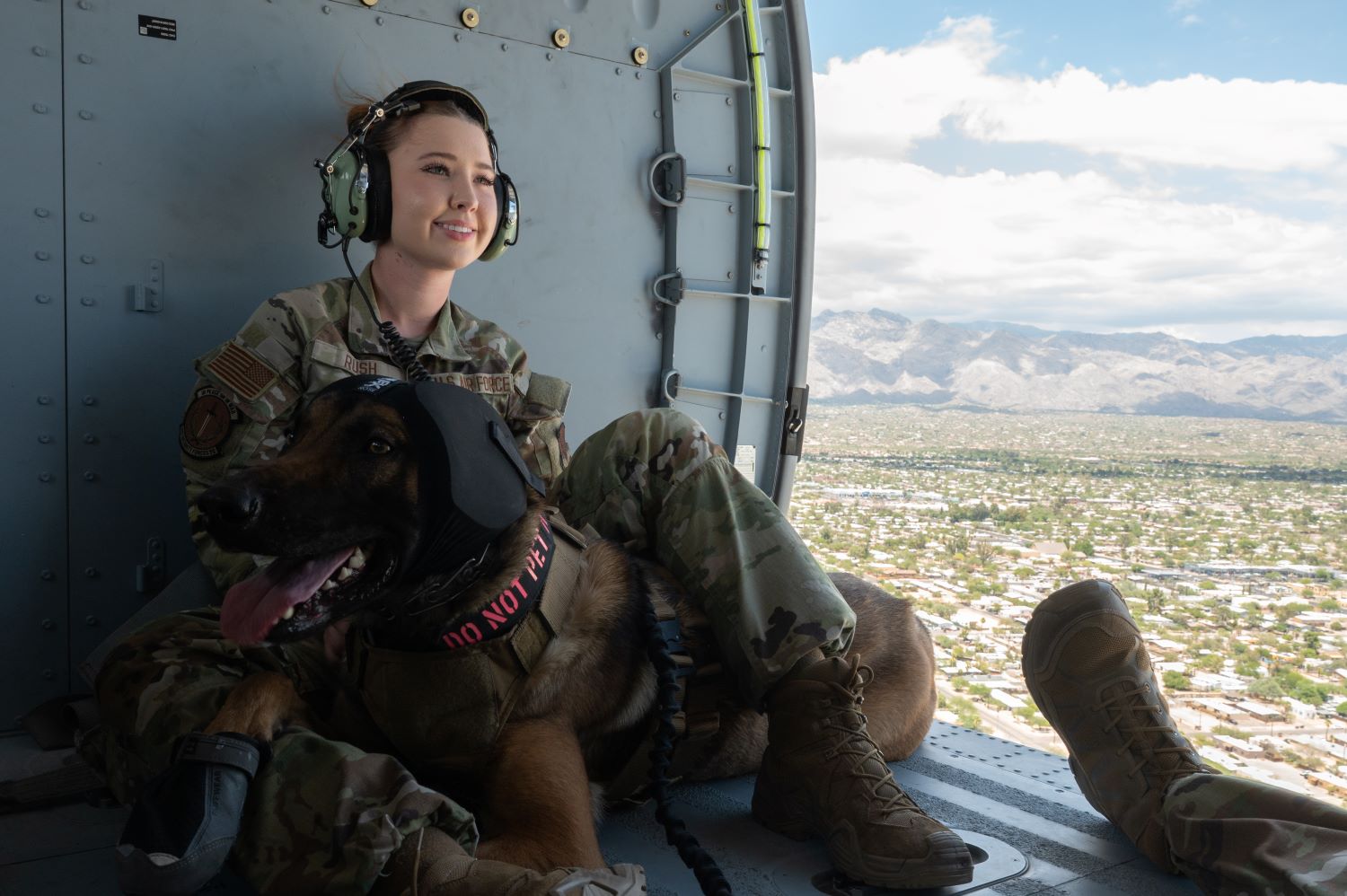
U.S. Air Force Senior Airman Kimbree Rush, 355th Security Forces Squadron military working dog handler, comforts a MWD on board an HH-60W Jolly Green II helicopter above Tucson, Arizona, June 3, 2025. Rush spent 20 minutes in the air with her MWD flying above Tucson to become comfortable on board the helicopter.
Carrying the Legacy with Every Step

On March 13, 2025, Senior Airman William Collins, a military working dog handler with the 460th Security Forces Squadron, completed a ruck march alongside his MWD, Jack, at Buckley Space Force Base, Colorado, in honor of K-9 Veterans Day. This annual observance pays tribute to the courage, loyalty, and life-saving service of military working dogs throughout history.
A ruck march is a physically demanding military exercise in which service members carry a weighted backpack—often filled with gear or supplies—over a set distance. It’s designed to build endurance, mental toughness, and operational readiness, simulating the conditions troops might face during deployments or missions. For military working dog (MWD) teams, ruck marches also serve as valuable bonding and conditioning time, helping both handler and dog stay mission-ready under physically stressful conditions.
Sharp Senses in Action
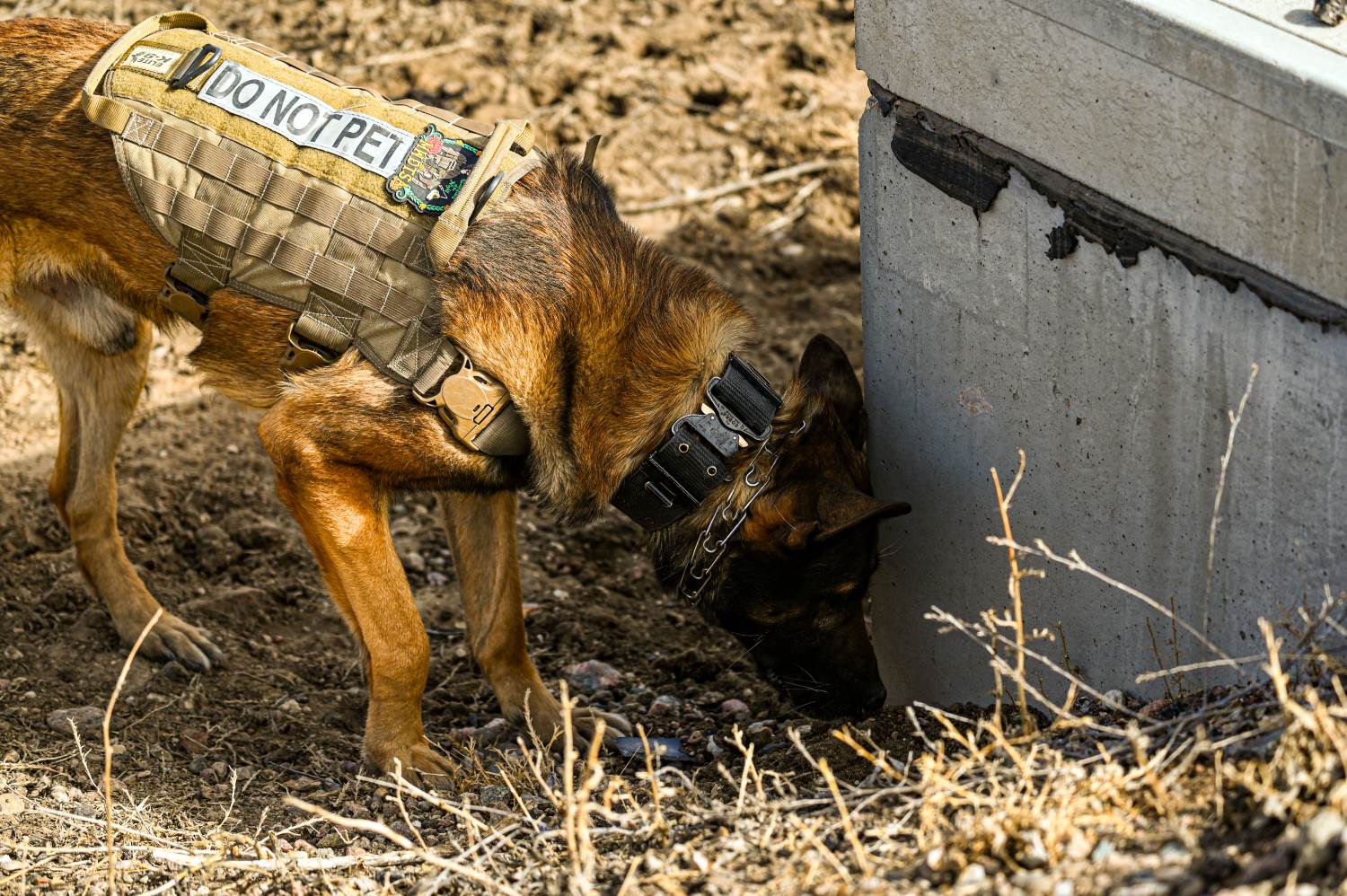
Senior Airman Dariel Gonzalez Ramos, a military working dog handler with the 90th Security Forces Squadron, conducts detection training with MWD Rex at F.E. Warren Air Force Base, Wyoming, on March 10, 2025. The training, which incorporates environmental distractions, is designed to evaluate and sharpen the dog’s ability to detect threats in simulated high-stress or hostile conditions.
Get in Formation

U.S. Army Cpl. Gabriel Franco Resto, a military working dog handler with the 550th Military Working Dog Detachment, Combined Joint Task Force – Operation Inherent Resolve, takes a break with his partner, MWD Roxy, during detection and security operations at Union III in Baghdad, Iraq, on January 17, 2025. These operations are vital to the safety and effectiveness of Coalition forces, with MWD teams enhancing security capabilities through their specialized explosive detection and protection skills.
Play Time
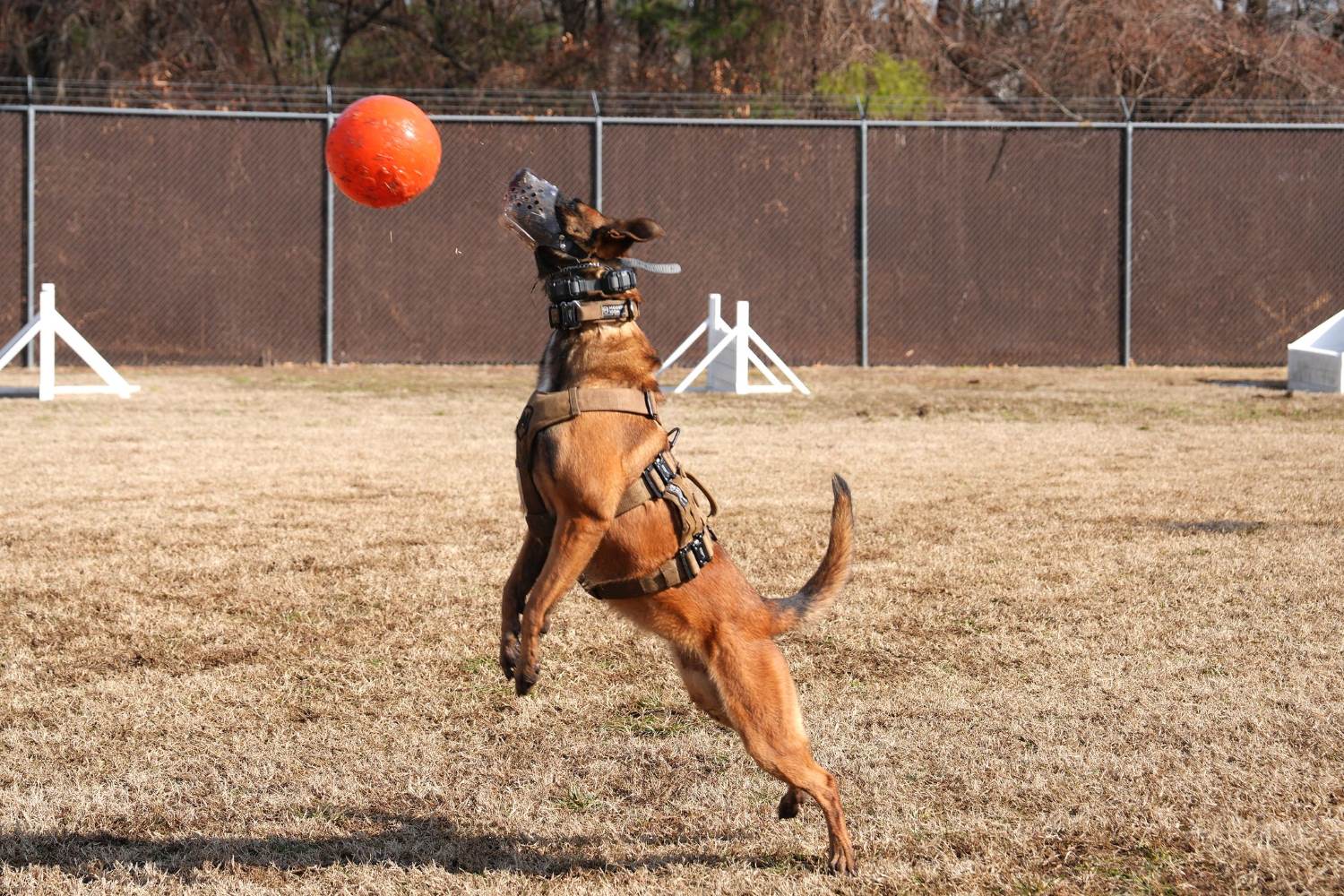
Military Working Dog Yyumba enjoys a playful moment with a ball during a socialization demonstration, showcasing the importance of interaction and enrichment in MWD training. Contrary to the common belief that military working dogs must always be kept separate, demonstrations like this highlight their ability to engage positively with others in controlled environments.
Two Visions, One Option

U.S. Air Force Senior Airman Andrew Lewis, a military working dog handler with the 375th Security Forces Squadron, poses with MWD Hamer at Scott Air Force Base, Illinois, on November 21, 2024. Together, MWD teams like Lewis and Hamer play a vital role in safeguarding military installations through their specialized detection and patrol capabilities, enhancing base security and force protection efforts.
Training on the Sand, Ready for Any Terrain
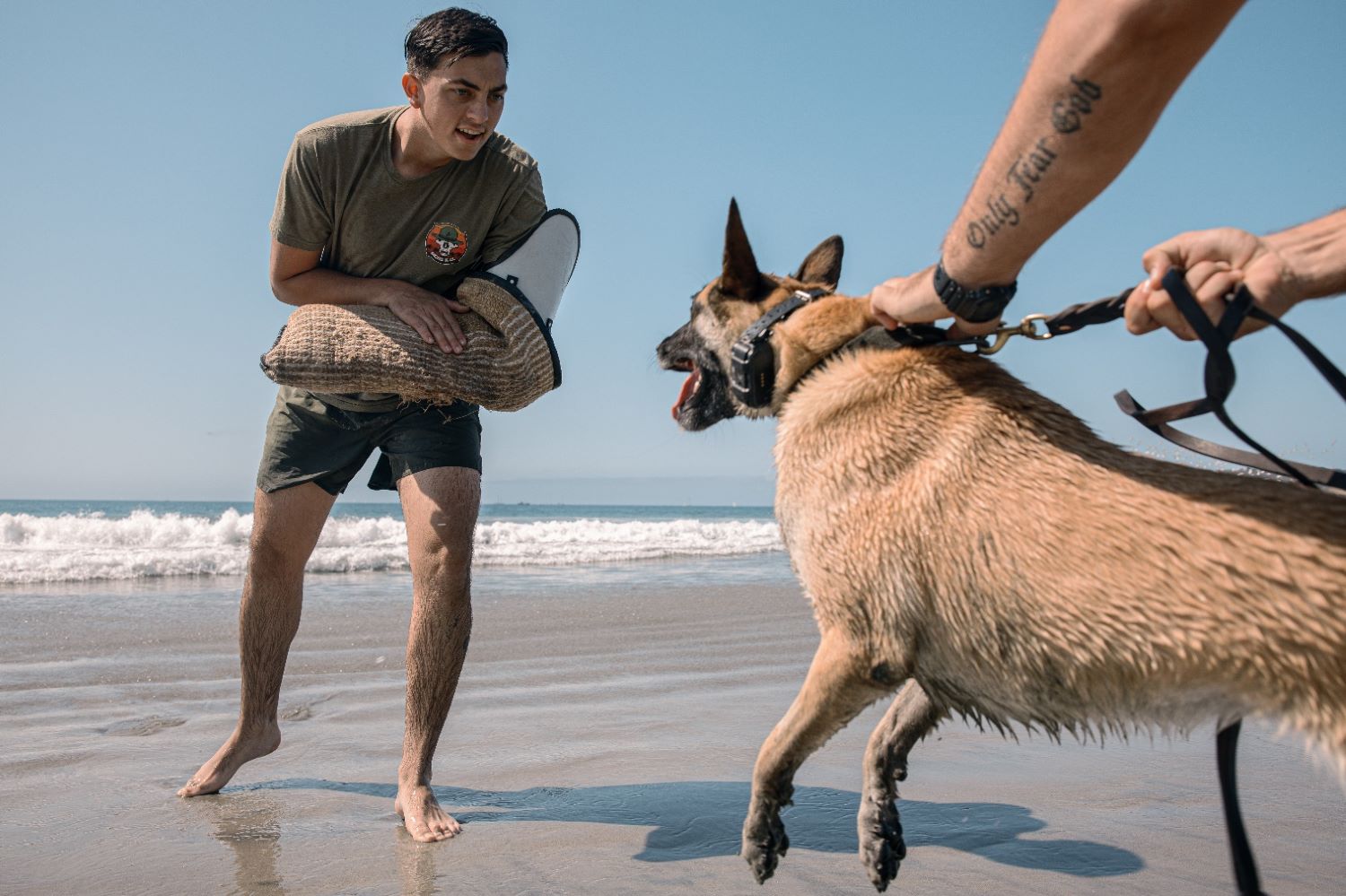
U.S. Marine Corps Cpl. Evan Sergis, a military working dog handler with the Provost Marshal’s Office, Headquarters and Service Battalion, Marine Corps Recruit Depot San Diego, conducts patrol training with his K-9 partner, MWD Menta, at Naval Air Station North Island, San Diego, California, on Sept. 10, 2024. The beach-based training is designed to strengthen the dogs’ adaptability and performance across diverse operational environments.
Small but Mighty

Tech. Sgt. Amadio Apilado, a Military Working Dog (MWD) instructor with the 341st Training Squadron, holds MWD Tery following a narcotics detection training session at Joint Base San Antonio-Lackland, Texas, on March 6, 2023. Now stationed in Guam—Apilado’s hometown—Tery applies the skills developed under Apilado’s guidance.
The U.S. Navy employs small dog breeds for detecting narcotics and explosives in confined areas such as submarine compartments, ships, and aircraft carriers. These breeds are sourced from Europe and trained at the 341st TRS, where handlers prepare them for operational readiness in under 60 days. The squadron supplies highly trained MWDs and handlers to the Department of Defense and agencies like the Transportation Security Administration.
Powerful Bite!

A military working dog’s bite is not only incredibly forceful but also remarkably precise. Breeds like the Belgian Malinois and German Shepherd can exert a bite force of over 300 to 400 pounds per square inch (PSI). To sustain this level of power and control, MWDs undergo frequent and varied training.
In the photo, a U.S. Air Force military working dog, right, and Staff Sgt. Jordan Cantrell of the 31st Security Forces Squadron, conduct water familiarization training at Aviano Air Base, Italy, on September 4, 2024. This type of training ensures that MWDs remain confident and effective in a wide range of environments and scenarios.
MWDs Track Evading Aircrew

U.S. Air Force Senior Airman Ogilvie Courtney, a military working dog (MWD) handler with the 52nd Security Forces Squadron, and MWD Catalina search for evading pilots during Combat Survival Training at Spangdahlem Air Base, Germany, on August 22, 2024. As part of the exercise, MWD teams were challenged to track and locate pilots before they could reach their designated extraction points—demonstrating the dogs’ critical role in real-world recovery and security missions.
Remembering a Loyal Partner

U.S. Air Force Senior Airman William Hepp V, a military working dog handler with the 374th Security Forces Squadron, stands at attention to receive a Meritorious Service certificate in memory of MWD Tek during a memorial service held at Yokota Air Base, Japan, on July 1, 2024. Tek was Hepp’s first assigned partner, and the two served together for more than two years.