Why Apple Is Struggling to Keep Up in the AI Race
Tech moves fast, blindingly fast. Just a couple of years ago, AI was a niche research topic. Now, it’s everywhere, dominating headlines and reshaping entire industries.
When ChatGPT rocketed to 100 million users in just two months, it wasn’t just a viral app—it was a wake-up call. It made one thing crystal clear: AI is no longer a futuristic dream. It’s here, it’s real, and it’s the next great frontier. In response, tech giants scrambled to stake their claim in the AI gold rush, rolling out chatbots, copilots, assistants, and more.
But while most were sprinting toward the future, one name, perhaps the most iconic of them all, seemed oddly quiet. Apple. The company that once set the pace for consumer tech suddenly looked like it was watching from the sidelines.
To understand why the tech giant appears to be falling behind, we need to examine its long-term strategy and assess whether it still holds up in the age of AI.
Apple’s Blueprint to Gain an Upper Hand in the Game
Apple has never been in a rush to be first, and that’s kind of their thing. While other tech companies sprint to launch the latest and greatest, Apple often hangs back, watches the chaos unfold, and then quietly steps in with a version that just… works. It’s what you might call a “second-mover” strategy, and it’s been one of the smartest plays in modern business.
Think about it: Apple didn’t invent the smartphone, the tablet, or the wireless earbud. But the iPhone, iPad, and AirPods? They became the gold standard. The iPhone wasn’t the first smartphone—BlackBerry and Palm got there earlier—but it redefined the category with a sleek touchscreen and intuitive interface.
The iPad wasn’t the first tablet, but it succeeded where Microsoft’s early tablet PCs struggled. And while companies like Jabra and Samsung released wireless earbuds before AirPods, Apple’s design, integration, and ease of use made them a cultural icon.
This pattern shows up everywhere. The MacBook Air wasn’t the first ultraportable laptop, but it became the blueprint for what modern laptops should look and feel like. The Apple Watch wasn’t the first smartwatch, but it combined fitness, notifications, and deep iPhone integration in a way no competitor had nailed.
Even with biometric security—Touch ID and Face ID weren’t novel ideas, but Apple’s implementation set new standards for reliability and user experience. And in 2020, when Apple ditched Intel for its own M1 chips, it wasn’t the first to try ARM-based computing—but the leap in performance and battery life shocked the industry.
This strategy has paid off big time. By skipping the early growing pains, Apple avoids costly missteps and focuses on perfecting the user experience. That perfectionism lets them charge premium prices, build unmatched customer loyalty, and dominate markets they didn’t even create.
Does the Old Playbook Still Work?
One thing that Apple hasn’t prepared for is the boom of AI. Nobody did—but instead of changing to adapt, Apple decided to stick to their old playbook.
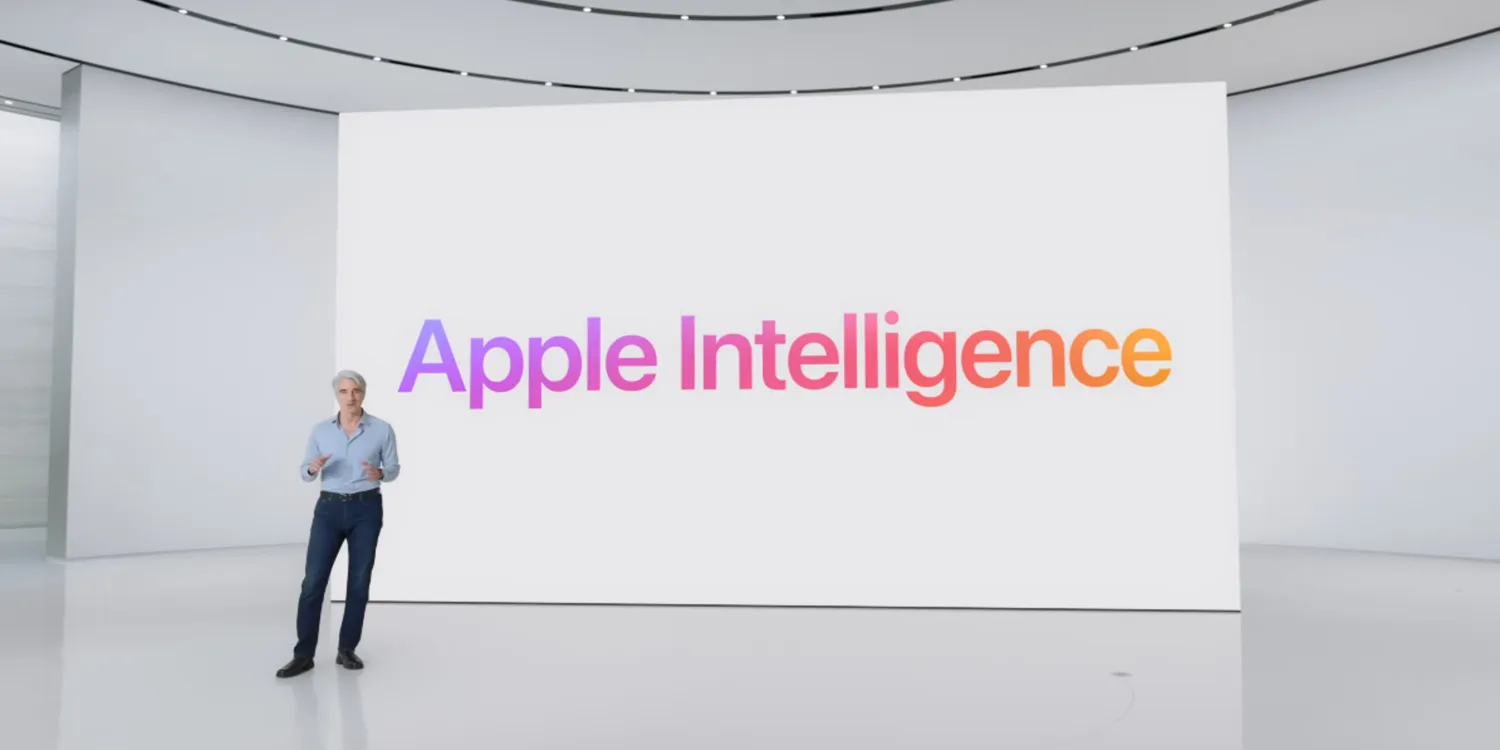
The thing about AI is it moves differently. It’s driven by data, iteration, and real-time feedback. The more users a model has, the better it gets. Companies like OpenAI, Google, and Microsoft have been deploying tools, gathering feedback, and improving their models in public. Apple, meanwhile, stayed silent. By the time it announced Apple Intelligence in 2024, competitors had already built massive lead time, user loyalty, and ecosystem lock-in.
Unlike consumer electronics, AI is not a one-time purchase or a sleek piece of hardware—it’s an ongoing service that evolves constantly. Apple’s strength in building walled gardens and polished products works against it here. The AI community thrives on openness, shared research, and fast iteration. Apple’s closed ecosystem limits its ability to keep pace with this rapid innovation cycle.
Falling Behind the AI Race
Let’s talk about Siri. This is the one piece of AI Apple should’ve nailed by now. When Siri debuted in 2011, it felt like a glimpse into the future. Fast forward to 2025, and it’s more of a running joke. It hasn’t kept up with the times—lacking any real conversational flow, awareness of context, or consistent reliability. Ask it anything beyond a basic command, and odds are you’ll get a bland reply, a link to a web search, or no response at all.
Now stack that up against Google’s Gemini Live. It’s a huge leap forward—an assistant that actually feels intelligent. You can talk to it casually, interrupt it, change directions mid-conversation, and it keeps up. It also understands what’s on your screen or through your camera.
Microsoft’s Copilot is another example. It’s tightly integrated into Office tools, and it’s transforming the way people work. It can summarize long email threads, create charts in Excel, or even rewrite documents in Word. It’s not just answering queries—it’s performing meaningful work across your workflow.
Anthropic’s Claude is also quietly powerful. It offers thoughtful, step-by-step responses, remembers previous inputs, and stays grounded even in long or complex conversations. It’s built with reasoning in mind, not just surface-level chat.
And then there’s ChatGPT, which has become an all-purpose tool for professionals, students, and creators alike. Whether it’s analyzing PDFs, coding, brainstorming, or editing—it’s more than a chatbot; it’s a productivity engine.
Even Samsung is bringing AI into the mainstream with Galaxy AI, which offers real-time call translations, smarter photo editing, and useful tools baked right into the phone. The difference? These features are available now.
Meanwhile, Apple still says its big AI rollout is “coming soon.” That phrase is starting to wear thin. While other companies are delivering intelligent, context-aware assistants today, Apple is stuck in neutral.
They Just Keep Talking without Delivering
According to Marques Brownlee, a leading tech reviewer and influential voice in consumer electronics, Apple usually does a solid job of demonstrating their products in a relatively honest and hands-on way. But even Apple has had missteps, like the infamous AirPower charging pad, which never made it to market despite being announced with much fanfare.
In the context of Apple Intelligence, however, unlike past product launches, Apple hasn’t provided any real-life demonstrations of their new AI features—not to journalists, YouTubers, or the public.
“Apple Intelligence is one of those things where they have had this slow continuous rollout where the most interesting and possibly most important things are at the end of the rollout, but there’s no timetable. They’re just kind of coming at some point. And Apple’s never demoed them for us,” he stated.
Despite massive marketing efforts, including commercials and billboards, there’s been no tangible proof that the most hyped features—like a smarter, more context-aware Siri—are even functional. This gap between promotion and reality is what Brownlee calls Apple’s current crisis.
The lack of demos and the vagueness around release timelines suggest that the tech might be far from ready, despite Apple making it seem like a revolutionary new capability is already here.
For Brownlee, the situation is particularly striking because AI is not a slow-moving trend—it’s a fast-paced paradigm shift, and Apple seems to be behind. Competitors are shipping real, working AI tools while Apple appears to be stuck in the announcement phase.
That’s why, according to him, Apple Intelligence feels more like a strategy to appease investors rather than a truly innovative suite of products for users.
“To people paying close attention to Apple, I think Apple Intelligence has, from the beginning, kind of always felt more like a nice thing to please investors more than an actually useful revolutionary set of products that regular people are gonna love. But now that it’s so delayed and the disconnect is so obvious, it’s never been more apparent,” he discussed.
Major Interrelated Problems Behind the Scene
To understand what happened to the tech behemoth, let’s go all the way back to when Steve Jobs passed away.
Leadership Disarray and Internal Power Struggles
When Steve Jobs passed away in 2011, Apple lost not just a CEO, but a visionary who was deeply involved in every product decision. Jobs combined product intuition, risk-taking, and ruthless focus—qualities that often pushed Apple to lead rather than follow.
Under his leadership, breakthrough products like the iPhone, iPad, and MacBook Pro emerged from a tightly integrated culture where design, hardware, and software teams worked in lockstep.
After Jobs, Tim Cook brought a different kind of leadership—highly operational, cautious, and metrics-driven. While this approach worked wonders for scaling Apple into a $3 trillion company, it also deprioritized the kind of bold, messy innovation that disruptive technologies like AI demand. In AI, speed matters.
Experiments are necessary. But Apple’s culture became one where risk-aversion reigned and teams were encouraged to “polish” rather than “prototype.”
The disconnect became even more visible with the rise of AI between 2020 and 2025. Apple’s AI leadership was divided between John Giannandrea, a former Google AI executive, and Craig Federighi, Apple’s software chief. Instead of uniting under a common vision, their teams operated in silos.
Giannandrea was focused on foundational research—developing large language models behind the scenes—while Federighi pushed for consumer-facing AI features in iOS. But without a single leader who could do what Jobs once did—bridge vision and execution—projects stagnated, priorities conflicted, and Apple fell behind.
By contrast, companies like Google and Microsoft placed AI at the center of their leadership structure. Sundar Pichai openly made AI Google’s top priority. Satya Nadella restructured Microsoft around AI innovation. Meanwhile, Apple treated AI like just another feature layer—one that had to clear a thousand bureaucratic hurdles before it could see daylight.
What Apple needed was bold direction and empowered decision-making. Instead, it got turf wars, cautious iteration, and a painful realization: in the AI era, operational excellence isn’t enough.
Apple Passed on ChatGPT Integration
According to multiple reports, including one from The Information, Sam Altman, CEO of OpenAI, met with Apple executives in early 2023 to propose an integration of ChatGPT into Apple’s ecosystem.
But Apple passed. At the time, company leaders dismissed ChatGPT as a gimmick rather than a transformative platform. This was a stark contrast to Microsoft, which moved quickly to incorporate OpenAI’s models into Bing, Microsoft 365, and Azure.
Apple’s decision to go it alone set the company back significantly. While others raced ahead with partnerships and public-facing rollouts, Apple was still refining internal tools and debating strategy.
But by mid-2024, Apple had clearly recalibrated. At WWDC that year, the company unveiled a surprise partnership with OpenAI, integrating ChatGPT into iOS, iPadOS, and macOS under the new “Apple Intelligence” banner. It was a notable shift from their earlier stance—one that acknowledged the growing demand for generative AI tools and the pressure to keep pace with competitors. The integration allowed Siri to tap into ChatGPT for more complex queries, and brought features like AI-powered writing assistance and image generation to Apple’s native apps.
Legal Trouble and Consumer Backlash After Launch
When Apple finally announced its own AI system—branded “Apple Intelligence”—at WWDC 2025, expectations were sky-high. The company promised advanced capabilities, including a smarter Siri, on-device processing, and personalized intelligence.
But shortly after launch, users began reporting inconsistent performance, limited functionality, and misleading advertising. This triggered multiple class action lawsuits, with consumers alleging that Apple exaggerated the system’s capabilities.
Meanwhile, Google’s Gemini and Microsoft Copilot had already set a new benchmark for AI reliability and versatility. Instead of leading the AI conversation, Apple found itself defending its reputation in court.
How is Apple Doing Now?
In June and July 2025, Apple made significant strides in delivering on its Apple Intelligence vision. At WWDC25, it introduced new features like Live Translation in Messages and FaceTime, expanded Visual Intelligence, and opened its on-device AI model to developers for private, offline use.

In July, Apple released a technical report detailing its upgraded models: a ~3B-parameter on-device model and a cloud-based model using a novel Parallel-Track Mixture-of-Experts (PT-MoE) architecture. Both support multimodal input and multiple languages, and Apple also launched a Swift-based framework to help developers integrate these tools easily—all while maintaining its strong focus on privacy and efficiency.
So while Apple’s approach may feel like “talk first, deliver later,” they are starting to ship real features—just at a more measured pace. The big question is whether that pace will be fast enough to stay competitive in a rapidly evolving AI landscape.