How Ambience Healthcare Frees Clinicians from Time-Draining Tasks

If you look at the healthcare system today, it is hard to deny that it has failed clinicians when so much of their time is taken up by documentation, billing, insurance processing, and navigating electronic health records (EHRs).
Not many people know that in the past, clinicians didn’t have to deal with any of these. It was the “heyday of medicine,” when the focus was squarely on patient interaction rather than documentation. A physician just needed to walk into a room, speak with the patient, assess their condition, and devise a treatment plan without being tethered to a computer or burdened by layers of administrative tasks.
With clinician burnout at an all-time high, many long for the “golden days” when they could focus on patients instead of paperwork. Thanks to Ambience Healthcare, those days are making a comeback. The company uses AI to create a tool that seamlessly integrates with the EHR, handling time-consuming tasks and giving clinicians back the time to connect with their patients.
The technology is impressive and has the potential to be a life-changing tool for clinicians today. However, anyone aiming to improve healthcare must approach it with deep passion, as the system is highly complex. We have heard many stories about entrepreneurs whose childhood experiences and unpleasant events in the past shape the problems they are trying to solve.
It goes the same with Ambiance Healthcare’s founders!
Ambiance Healthcare – From Personal Traumas to a Disruptive Solution
Let’s begin with Nikhil Buduma, one of the founders of Ambience Healthcare.
His journey into healthcare started with his own experiences as a patient. He was born with severe heart defects and developed sepsis multiple times as a child, spending much of his early life in hospitals. His parents were recent immigrants from rural India who had no insurance and little understanding of the US healthcare system. Modern medicine saved his life, but he also saw the deep financial and emotional toll it placed on his family.
Nikhil originally planned to become a clinician scientist. He spent eight years in research at San Jose State and Stanford, focusing on drug discovery, vaccine design, and stem cell biology. His direction changed when his first mentor died after being misdiagnosed and placed on the wrong treatment plan. This was not a failure of medical knowledge but of the system itself.
“She ended up passing away — she had a mischaracterized sarcoma, she was on the wrong care plan, and by the time they realized it, it had metastasized to her brain. And, you know, it was one of those things where it wasn’t necessarily the limit of our knowledge that was the reason that happened. So, you start to re-evaluate a lot of the reasons why and how you want to contribute to the field,” Nikhil remembered.
While studying at MIT, Nikhil met his co-founder Michael “Mike” Ng. Mike began his career in the early 2000s as a nanotech researcher, writing his thesis on time series prediction modeling. His pivot to healthcare was driven by a personal accident that fractured his back and exposed him to the inefficiencies and misdiagnoses within the medical system.
“I actually fractured my back in 2012. And it’s one of those things where you think you’re healthy until something happens, and all of a sudden you have no idea how to navigate the health system. They originally thought it was a sprain, but it was actually a fracture. And care plans—one is ‘keep moving,’ the other one is ‘don’t move at all.’ So after I did get the right scans, I was stuck in bed for several weeks, and laying in bed for too long, you get muscle pain, muscle spasms,” Mike recalled.
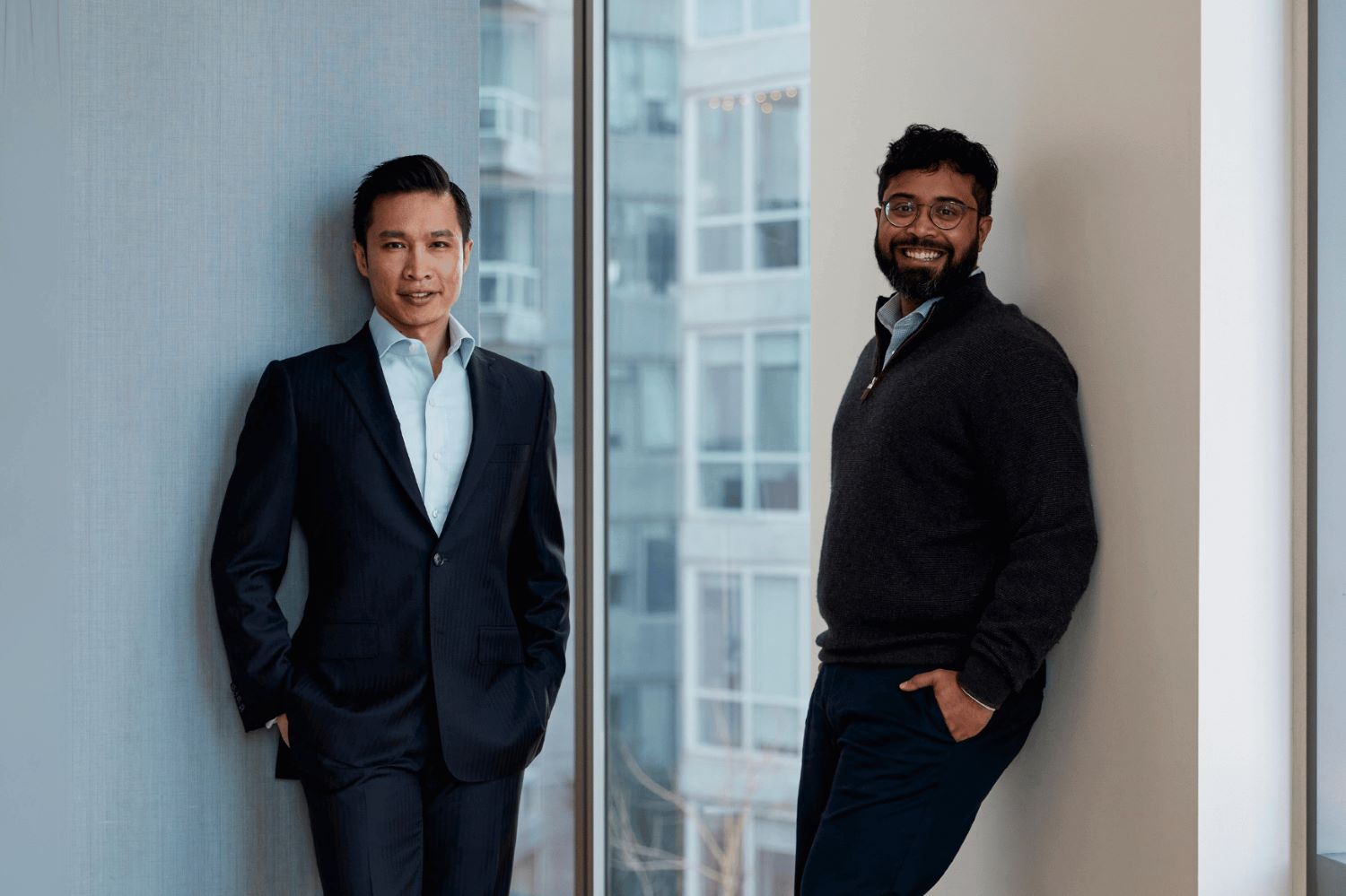
Together, Mike and Nikhil felt that their shared experiences convinced them that the best way to make an impact was to leverage technology to support the people who deliver care.
“We started to realize that maybe the right way for us to refocus was: how can we leverage technology to better support the stewards of our care? And we just had this really incredible opportunity, being at the right place at the right time,” said Nikhil.
In 2012 and 2013, they had the opportunity to work in a research group at OpenAI, which made them realize the transformative potential of AI and its ability to change how people work, especially in healthcare. Ambience would later become OpenAI’s first-ever investment.
Mike Ng and Nikhil Buduma co-founded their first company, Remedy, in 2016. It was based in San Francisco and focused on using AI-powered healthcare screening to identify patients with undiagnosed chronic diseases. The company aimed to empower doctors by automating preventive health assessments, but it ceased operations in 2018.
Their experience at Remedy laid the groundwork for their next venture, which is one of the most promising startups in healthcare todays – Ambience Healthcare. The duo founded Ambience in 2020 with the goal of creating AI co-pilots to streamline clinical workflows and reduce burnout.
How Bad is the Burden that Clinicians are Suffering from?
One of the most pressing issues in healthcare today is the imbalance between time spent on patient care and time consumed by administrative tasks. Michael Nguyen points out that only about 27% of a clinician’s day is spent directly with patients, while roughly 73% is taken up by charting, coding, and other documentation-related duties.
This observation aligns with broader research: a study published in Health Affairs found that physicians spend nearly half of their workday interacting with electronic health records (EHRs), and a survey by the American Medical Association (AMA) revealed that 58.1% of physicians feel documentation detracts from patient interaction.
This documentation burden has led to widespread burnout. Clinicians often face a painful choice: multitask during patient visits or stay up late finishing charts.
According to a 2022 survey by the American Medical Informatics Association, 77% of healthcare professionals report working after hours to complete documentation, and nearly 63% of physicians show signs of burnout. This has become a leading cause of workforce attrition, with many clinicians considering leaving the profession altogether—right in the midst of a national shortage.
Adding to the strain is the cost and scalability of human scribes. The U.S. employs over 100,000 scribes, costing more than $4 billion annually, as stated by Nikhil Buduma.
Scribe programs remain difficult to scale, especially in high-turnover settings like emergency departments, where most scribes treat the role as a short-term step toward other medical careers. This leaves hospitals in a constant cycle of recruiting, training, and replacing staff. Even top institutions like UCSF have struggled to provide consistent scribing coverage for their clinicians.
At the same time, demand for care is surging, with 11,000 Americans joining Medicare every day. This demographic shift is driving unprecedented pressure on the healthcare system, which is already operating at capacity.
Since overworked clinicians can’t simply take on more patients, the industry faces a structural challenge: it must rethink care delivery to do more with fewer resources, ensuring that every dollar spent delivers measurable value.
Why Their Solution Works so Well?
There are several reasons why Ambience Healthcare has worked so well; we can start with deep integration.
Deep Integration
Ambience doesn’t operate as a bolt-on tool—it’s embedded directly into the clinician’s workflow and the electronic health record (EHR) system. This deep integration means that clinicians don’t have to toggle between platforms, copy-paste notes, or manually reconcile documentation with billing systems.
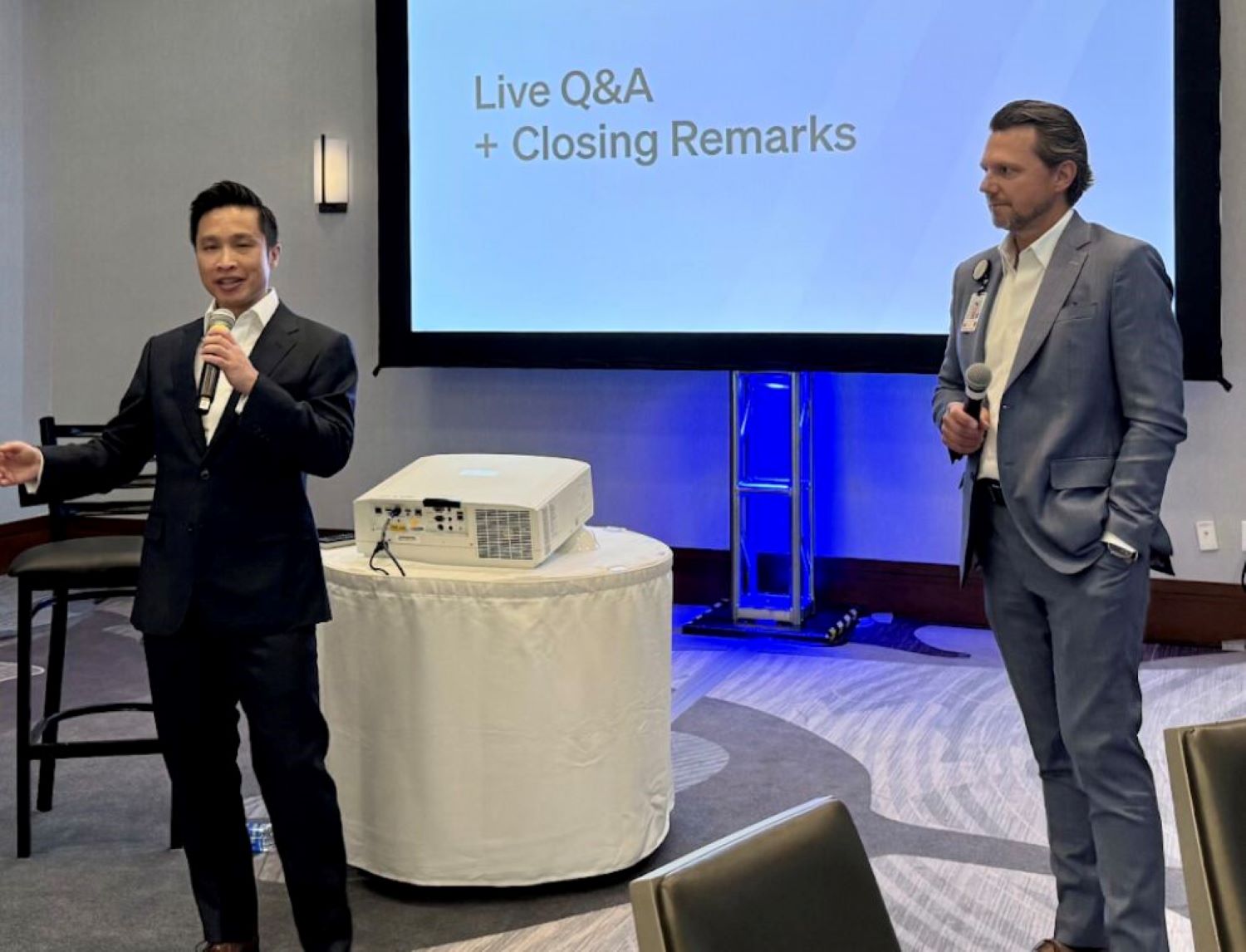
Instead, Ambiance works in concert to capture the clinical conversation and generate documentation and coding inputs that flow seamlessly into the EHR.
This integration also extends to the revenue cycle. By aligning documentation with coding requirements in real time, Ambience ensures that notes support accurate CPT, ICD-10, and E/M codes. That’s critical for compliance, reimbursement, and risk adjustment. It eliminates the need for back-office coders to interpret vague or incomplete notes, reducing delays and revenue leakage.
Specialty-Specific
One of Ambience Healthcare’s biggest advantages is that it never treated medicine as a monolith. In healthcare, the way a neurologist documents a patient visit is entirely different from how an orthopedic surgeon or an oncologist does it.
The terminology changes, the priorities shift, and the structure of the note itself can be worlds apart. Trying to use a one-size-fits-all AI for all of these fields inevitably leads to inaccuracies—mistakes that can frustrate clinicians, slow them down, or even cause downstream clinical and billing issues.
Ambience addressed this head-on by building specialty-specific intelligence into its platform from day one. The company assembled teams of clinicians and AI engineers to map out the workflows, language patterns, and documentation styles for more than 100 specialties and subspecialties. As a result, the AI doesn’t just “transcribe”—it writes in the voice of the specialty, capturing the nuances that make each field unique.
”It is true these base models off the shelf do work in subspecialties, but when you actually get to these complex subspecialties, the base models run out of knowledge fairly quickly. And as a team, we try to figure out: what are the clinicians actually writing versus what our machine is producing? We do a lot of custom fine-tuning work to make the ambient listening platform performant and reliable—even in those very complex service lines. That’s why we built our clinical AI team, which has a lot of clinicians and a lot of AI researchers chasing the nth degree of perfection—fine-tuning that,” Michael explained.
This level of precision changes how doctors interact with the tool. Instead of bending their workflow to match a generic system, clinicians find that Ambience mirrors the way they already think and work. The result is faster adoption, deeper trust, and documentation that feels like it was written by someone inside the specialty—not an outsider.
Documentation and Coding Must Be Tied Together
In healthcare, documentation and coding are deeply intertwined, and separating them often leads to inefficiency, errors, and revenue loss. Clinical documentation tells the full story of a patient’s visit—capturing their symptoms, diagnoses, procedures, and treatment plans. Medical coding takes that story and translates it into standardized codes like ICD and CPT, which power billing, insurance reimbursement, and reporting.
When these two processes are handled in isolation, problems arise. Coders may need to chase down clinicians for clarification, or worse, make assumptions that result in incorrect claims, compliance issues, or underpayments. This not only slows down the workflow but also increases the administrative burden on healthcare teams.
Ambience addresses this by combining documentation and coding into a single, seamless process. As the AI drafts the clinical note, it simultaneously extracts the relevant codes in real time.
And because the system is specialty-specific, it understands the unique language and requirements of each medical field. The result is that clinicians don’t have to re-enter information or worry about coding errors later, and billing teams can work with clean, accurate data that’s ready for submission right away.
Ambience Healthcare Soars to Unicorn Status
Ambience Healthcare has officially joined the ranks of unicorns after closing a $243 million Series C funding round, announced on July 29, 2025. This latest infusion of capital brings the company’s valuation to over $1.25 billion, marking a major milestone in its mission to transform healthcare delivery through AI-powered clinical tools.,
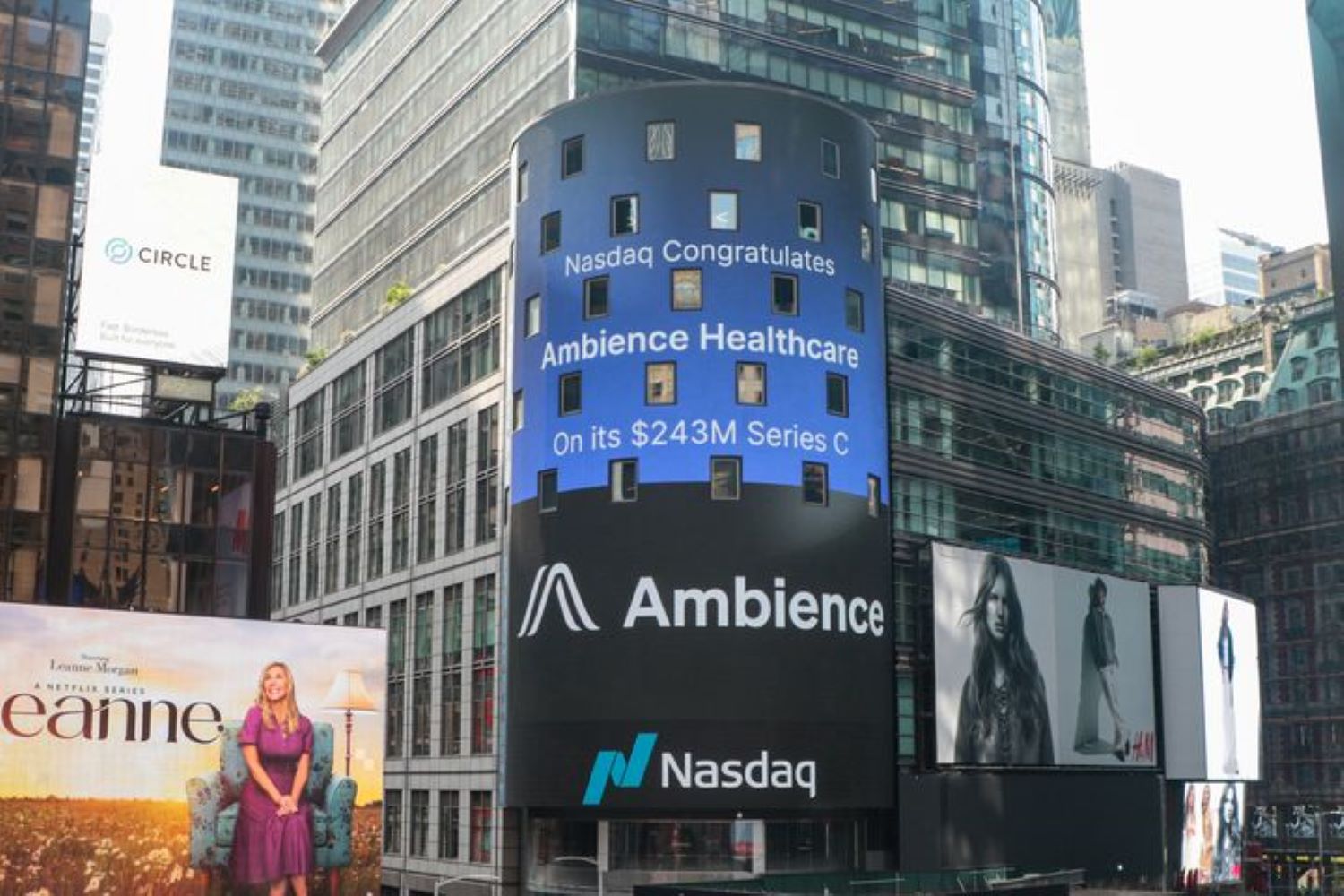
The round was led by Oak HC/FT and Andreessen Horowitz (a16z), two heavyweight investors with deep expertise in healthcare and technology.
They were joined by a robust lineup of strategic backers, including the OpenAI Startup Fund, Kleiner Perkins, Optum Ventures, Frist Cressey Ventures, Town Hall Ventures, Smash Capital, Georgian, and Founders Circle Capital. This diverse investor base signals strong confidence in Ambience’s vision and scalability.
Ambience Healthcare’s platform is already being adopted by leading health systems such as Cleveland Clinic, UCSF Health, Houston Methodist, and Memorial Hermann.
Its AI tools are designed to support clinicians in high-complexity subspecialties, emergency departments, and inpatient settings—areas where documentation burden and cognitive load are especially high. With this funding, Ambience plans to accelerate product development, expand its footprint across the U.S., and deepen its partnerships with health systems to improve care delivery at scale.
“Don’t build in a vacuum.”
One of his biggest lessons for building a successful health tech company? Don’t build in a vacuum. He learned early that the fastest way to create something truly valuable wasn’t to guess at what healthcare providers needed, but to work alongside them from day one. Partnering with the right health system wasn’t just about selling software — it was about co-creating it, shaping it together, and evolving it to fit real-world needs.
“Don’t build in a vacuum. I think some of our most important learnings is when we found the right health system partner and we co-created, co-built, co-evolved together,” he stated.
In the beginning, health systems had no reason to trust them. To a busy hospital administrator, they looked like just another one of the 50 vendors that show up each month claiming to have the next big thing. But by slowing down and truly understanding a partner’s pain points, not just where they wanted to go but how to get there intelligently, they broke through the noise.
For Ambience, that meant using ambient listening as a wedge to build a much broader platform, one that could later tackle critical tasks like revenue cycle management and serving the CFO.
Once they proved they could deliver, they didn’t just meet expectations, they blew past them. That overdelivery didn’t just win contracts; it built trust. And in healthcare, trust isn’t just nice to have, it’s the currency that allows you to expand into new areas and tackle even bigger problems together.
That approach has paid off in growth. In just 12 months, they’ve added about 120 people, and he still feels like they’re only in the “first innings” of what’s possible. Back in the seed stage, Ambience only had two core products, scribing and coding, which were always designed to work hand in hand. Today, health systems are asking them to build far more, and those original two products now make up less than 10% of their work.
“So, we’ve grown the team. We’ve added, I think, something like 120 people in the last 12 months. And because we feel like we’re in the first innings of so much more to build, but is the fact that we did so well with our customers and we followed through on our promises that we earned that trust to build everything else on top of that core platform,” Michael said.
He added, “And so if you asked where we were back in the seed round, we only had two core products to start off with, which is scribing and coding. That always for us had to be hand in hand. But you think about what health systems are asking us to build today. That’s less than 10% of everything we’re doing.”