
From Service to Success: Veterans Building Tomorrow’s Businesses

Veteran entrepreneurs have long been recognized for their adaptability and leadership, traits that were honed during their military service.
According to the U.S. Small Business Administration, veterans own 2.4 million businesses in the United States, generating over $1 trillion in sales and employing more than 4 million people.
Many of these veterans have seamlessly transitioned from military life to business ownership, using their experiences to drive innovation and growth in various industries.
Let’s highlight five veteran-owned businesses that have made impacts in their respective fields, from defense technology and aviation to construction, furniture craftsmanship, and healthcare.
From Air Force to Innovation Force: AJ Jarnagin’s Mission with EXPANSIA
Adam “AJ” Jarnagin is the founder and CEO of EXPANSIA, a company based in Nashua, New Hampshire. With a strong background in military experience, AJ has built a reputation for advancing technology and services that support the United States’ defense efforts.
His company works closely with government agencies and businesses to develop and implement innovative solutions that improve national defense.
As a service-disabled U.S. Air Force veteran, AJ has used his military experience to bring together the right people, technologies, and fast-moving strategies to support defense missions.
He focuses on space and cyber capabilities, helping to close the gaps between commercial innovation, government acquisitions, and operational teams. His work supports the Department of Defense, the Intelligence Community, and other federal agencies.

The idea for EXPANSIA came to AJ and his wife, Tynel Jarnagin, in 2014. They saw a chance to strengthen the nation’s defense by connecting different parts of the industry – commercial companies, R&D teams, and military users.
Their goal was to bridge the gaps and make sure new technologies actually reach the people who need them.
EXPANSIA’s team is made up of technical experts with advanced engineering backgrounds and deep experience in the military, defense, and aerospace fields. Co-founder and COO Tynel Jarnagin works alongside key leaders like Dr. Rick Nelson (CFO), Steve Vorisek (Chief Growth Officer), and Jerome White (VP of Space Operations) to guide the company’s success.
Their combined knowledge and leadership have helped EXPANSIA earn and deliver on high-level projects for clients like the U.S. Air Force, Space Force, the National Space Defense Center, and the FAA.
One of EXPANSIA’s most exciting projects is a groundbreaking digital marketplace system being developed for the U.S. Air Force. This system is designed to improve supply chain management by using advanced 3D printing (additive manufacturing) to produce metal parts on demand.
The result is faster production, shorter delays, and more efficient delivery of essential components – helping to keep military operations running smoothly.
Since starting out, EXPANSIA has grown fast – now with 85 employees and double the revenue between 2020 and 2022. But growing a business isn’t easy, especially with a team spread across 23 states.
Things got even harder during the COVID-19 pandemic, which really tested the team’s strength and flexibility. Even with these challenges, AJ and his team stayed focused and didn’t give up. They got help from groups like the Small Business Administration (SBA), New Hampshire PTAC, and SCORE.
With a strong focus on innovation and a dedication to delivering top-quality solutions for government clients, the company is set to make an even bigger impact in the defense world.
Heather Varney: A Veteran’s Vision That Built Aeroforce Logistics
Heather Varney went from serving in the Marine Corps to leading her own successful business – a journey worth exploring.
After a hand injury changed her military career from munitions to aviation supply, Heather transitioned out of service as a disabled veteran. Her next chapter started when she met Nick Weissenborn while working at an aircraft parts distribution company.
They quickly hit it off – Heather was impressed by Nick’s integrity and his dedication to always doing right by customers, no matter what the profit. With Heather’s expertise in supply chain management and Nick’s talent in sales, they soon realized they made a great team for starting a business.
In January 2016, Heather and Nick decided to start a company over a casual coffee. What followed were careful, strategic steps, starting with a visit to the SBA office in Milwaukee.
There, they were introduced to SCORE, a group of volunteer business mentors, who helped them develop a business plan and financial projections. For the first year, they kept their full-time jobs while working on Aeroforce Logistics during nights and weekends.
They started in Nick’s garage, setting up the necessary IT and inventory systems before they began actively seeking customers.
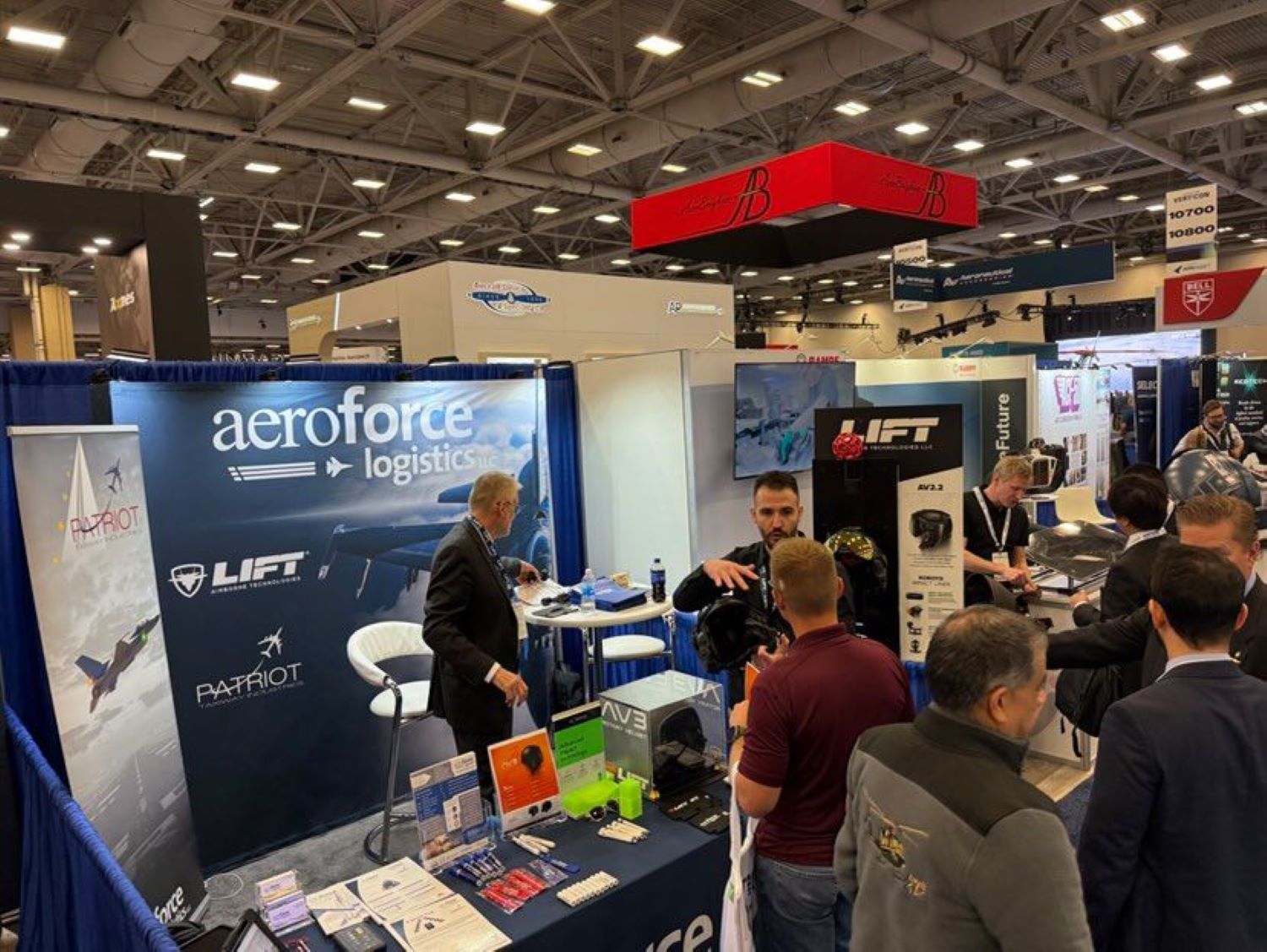
In early 2017, the business started picking up, and Nick was able to go full-time, with Heather joining him soon after. Their next big move was getting a commercial space in Milwaukee’s Riverwest neighborhood, located in an Opportunity Zone. This new space gave them more room to grow, with loading docks for better logistics.
Their next challenge was financing inventory, but with help from WWBIC, an SBA lender, they secured a $50,000 loan. The same day they got the loan, they landed a $120,000 federal contract. This was a turning point for the business.
By 2018, Aeroforce hired its first full-time employee. They improved their branding, strengthened IT security, and expanded their team. One of their classmates from the program even became their IT provider.
Heather also joined the SBA 8(a) Business Development Program, which helped them land larger government contracts and opened doors to more opportunities.
Despite the pandemic, Aeroforce kept growing, thanks to a $150,000 SBA Express loan and a PPP loan from Pyramax Bank. Sales have doubled every year since the business started, and the company continues to grow with focus and determination.
How Lamont Davis Grew Anvil Steel from the Ground Up
Lamont Davis, a service-disabled veteran who served in Operation Desert Storm, discovered his passion for ironworking after leaving the military. With more than 20 years of experience on big projects like the “Big Dig” in Boston, Lamont used his construction skills to start his own business.
In 2014, Lamont started Anvil Steel Engineering Inc., a small business with just one employee. By 2016, he hired a second employee and began gaining a reputation for high-quality work and constant improvement.
By 2018, Anvil Steel’s sales and profits grew, and the company expanded to five full-time employees. They continued to grow by taking on private and federal government contracts, becoming a well-known name in the New England construction industry.
Like many businesses, Anvil Steel faced a big challenge when the COVID-19 pandemic hit, causing many projects to be put on hold.
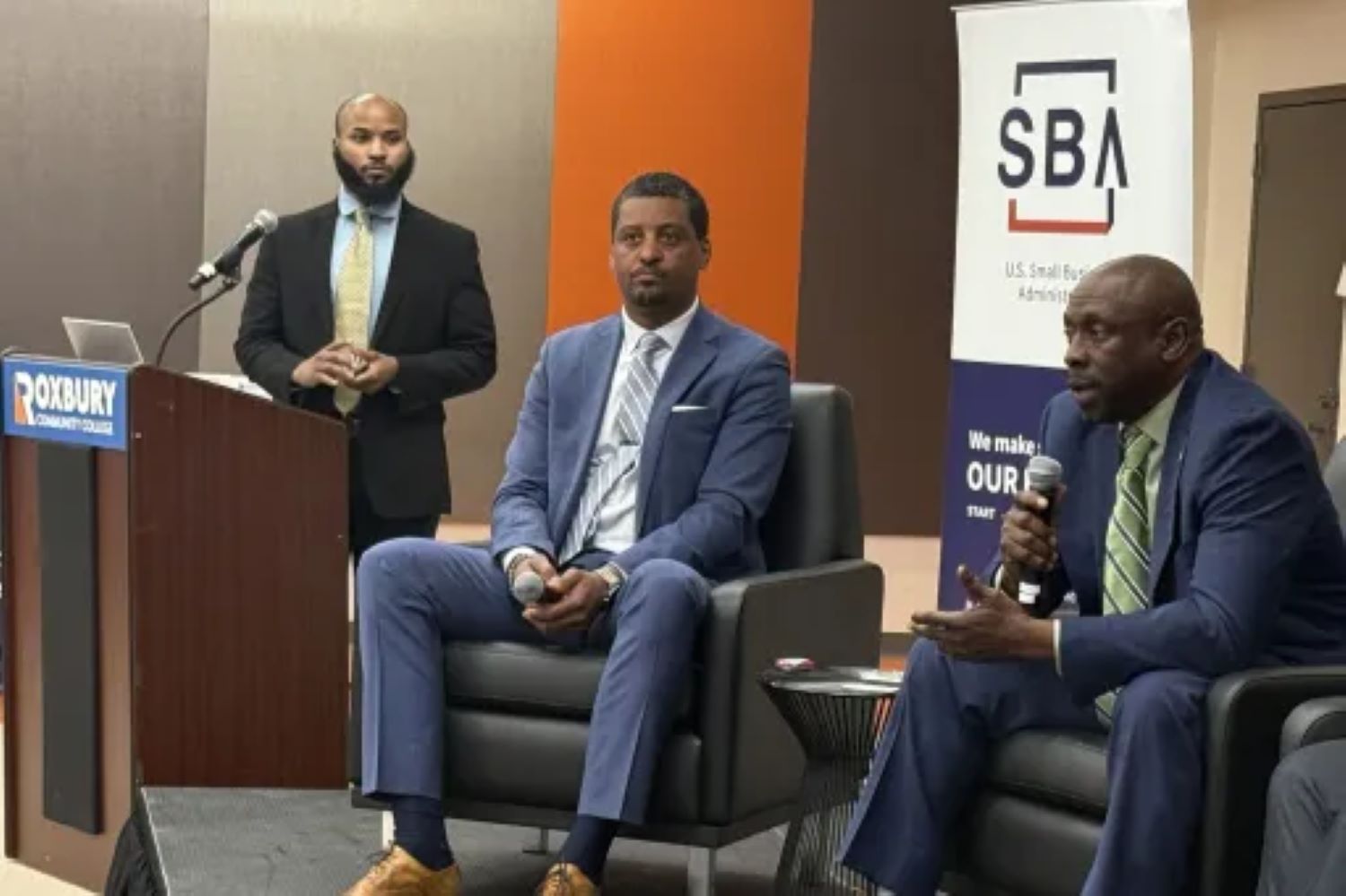
Despite challenges, Lamont used SBA programs like EIDL and PPP to keep Anvil Steel running and save jobs. The company grew to over 10 full-time employees. By joining the SBA’s 8(a) program, Anvil Steel gained access to government contracts. With help from the SBA’s Bid Match service, Lamont found new opportunities that increased sales and profits.
Some of Anvil Steel’s notable clients include Encore Casino, the U.S. Army Corps of Engineers, the FBI, and the U.S. Coast Guard, showing the company’s expanding reach in both the public and private sectors.
With a commercial space in Taunton, MA, Anvil Steel is set to keep expanding and making an impact on the construction industry.
Veteran-Owned and Built to Last: The Story of R.A. Page Farmhouse Furniture
Rick Page, who started his company in Laconia, New Hampshire, developed a love for woodworking at a young age, thanks to his father, Henry Page, a master craftsman.
After serving in the U.S. Air Force, Rick decided to turn his passion for quality craftsmanship into a business. In 1986, he founded R.A. Page Farmhouse Furniture. While Rick initially shared his talents as a musician, performing to boost the morale of fellow service members, he ultimately discovered his true calling in woodworking.
R.A. Page Farmhouse Furniture reflects New England’s rich history of craftsmanship, specializing in custom cabinetry and fine furniture. Known for creating functional, beautiful, and affordable designs, Rick built a strong reputation in his community.
The business has grown from a one-man operation in a small 500-square-foot shop to a team of 10 in an 8,500-square-foot facility. This growth was made possible through SBA programs, including a 504 loan from the Capital Regional Development Council (CRDC) and Bank of NH, which helped Rick purchase his current facility.
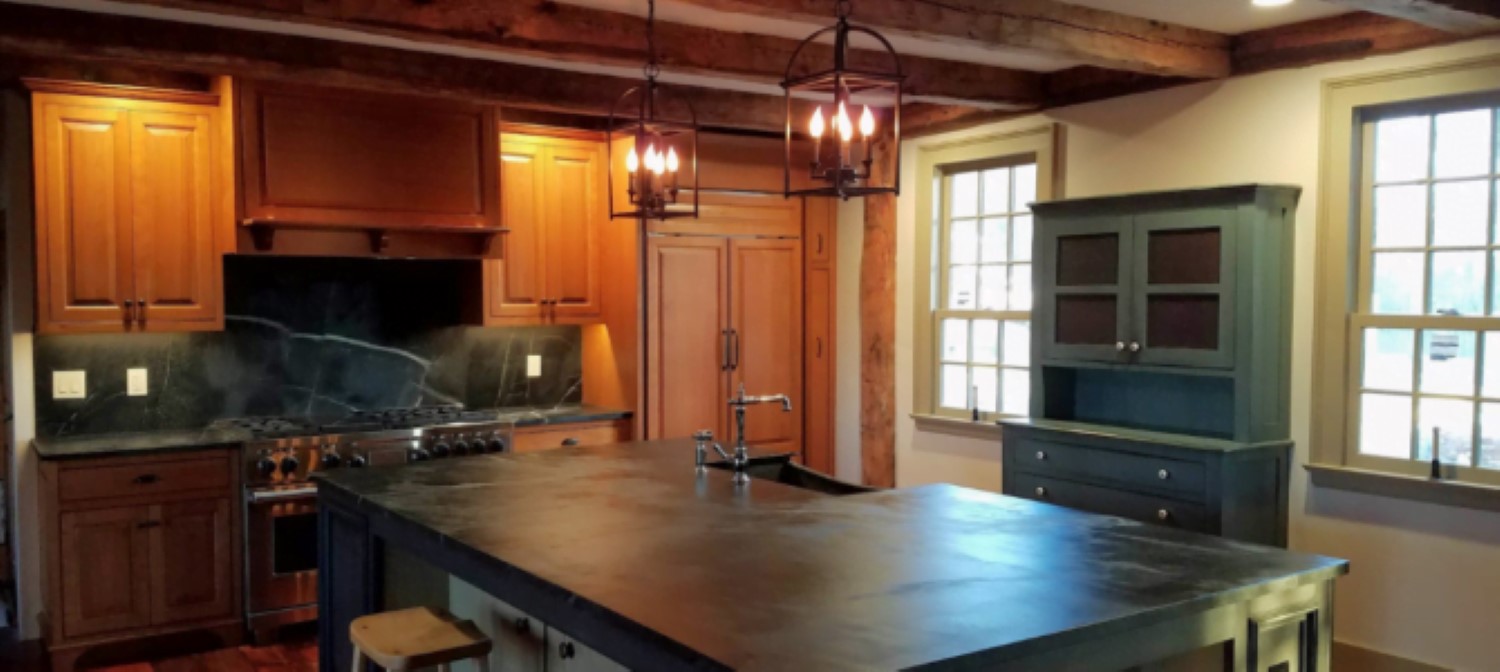
R.A. Page Farmhouse Furniture now provides custom builds and on-site installations throughout New England, from the Lakes Region of New Hampshire to Maine and Gloucester.
As a veteran-owned business, Rick’s entrepreneurial spirit and commitment to quality have earned him the recognition of the New Hampshire SBA as a nominee for Veteran Small Business Owner of the Year.
Moreover, the COVID-19 pandemic caused problems for many small businesses, but Rick was able to get through it with help from the SBA’s Paycheck Protection Program. This funding allowed him to keep his full-time staff working during uncertain times.
Now, Rick is looking to expand further by opening a lumber yard to provide local contractors and businesses with the hardwood they need, which is hard to find in the Lakes Region.
How Team CPR Became Stronger Under Shirley Walker’s Leadership
Among the most inspiring journeys is that of Shirley Walker, founder of Team CPR, a woman-, minority-, and veteran-owned medical billing and provider resources firm based in West Little Rock, Arkansas.
Shirley founded the business in 2010 after recognizing a critical need in the healthcare industry: many medical offices were understaffed and struggling to find qualified personnel to manage billing and reimbursement processes.
Her firm stepped in to handle these vital tasks, enabling providers to focus on patient care while ensuring that their revenue cycles kept running smoothly.
Team CPR faced big challenges when the COVID-19 pandemic started. With many businesses closing and uncertainty all around, Shirley and her team quickly adapted by using telemedicine. This allowed clinics to stay open and keep treating patients while protecting everyone’s health.
However, things were still tough, and Shirley had to make the difficult choice to lay off most of the team in the early days of the pandemic.

Despite the challenges, Shirley stayed focused on her company’s survival and growth. With help from SBA programs like the Paycheck Protection Program and the Economic Injury Disaster Loan, Team CPR was able to get back on track. These resources helped the business stay open, move to remote work, and eventually double in size from 2019.
Today, Team CPR is stronger, with a growing customer service team and 14 employees.