
Soarce – Bridge the Gap Between Sustainability and Functionality

Bio-based materials often face adoption challenges because they typically don’t match the performance of traditional synthetics. While they’re more sustainable, they can lack durability, fire resistance, or UV protection—qualities essential for applications like protective clothing or industrial textiles. Natural variability in raw materials also leads to inconsistent quality, which makes manufacturers hesitant to rely on them.
On top of that, bio-based materials are usually more expensive to produce and harder to scale. They often require specialized processing and aren’t always compatible with existing manufacturing systems. Combined with limited supply chains and lingering doubts about their reliability, these factors have slowed their mainstream adoption.
All these roadblocks have discouraged many who dream of pioneering the bio-based materials space. But Soarce is a clear exception. This ambitious startup is merging seaweed and nanotechnology to create high-performance, protective fabrics and leathers with a dramatically lower carbon footprint.
Soarce has developed a blueprint to systematically overcome each of the industry’s challenges. But before we dive into how they’re tackling these barriers, let’s rewind to the beginning and explore the story of how Soarce was born.
From Racing Drones to Revolutionary Fibers
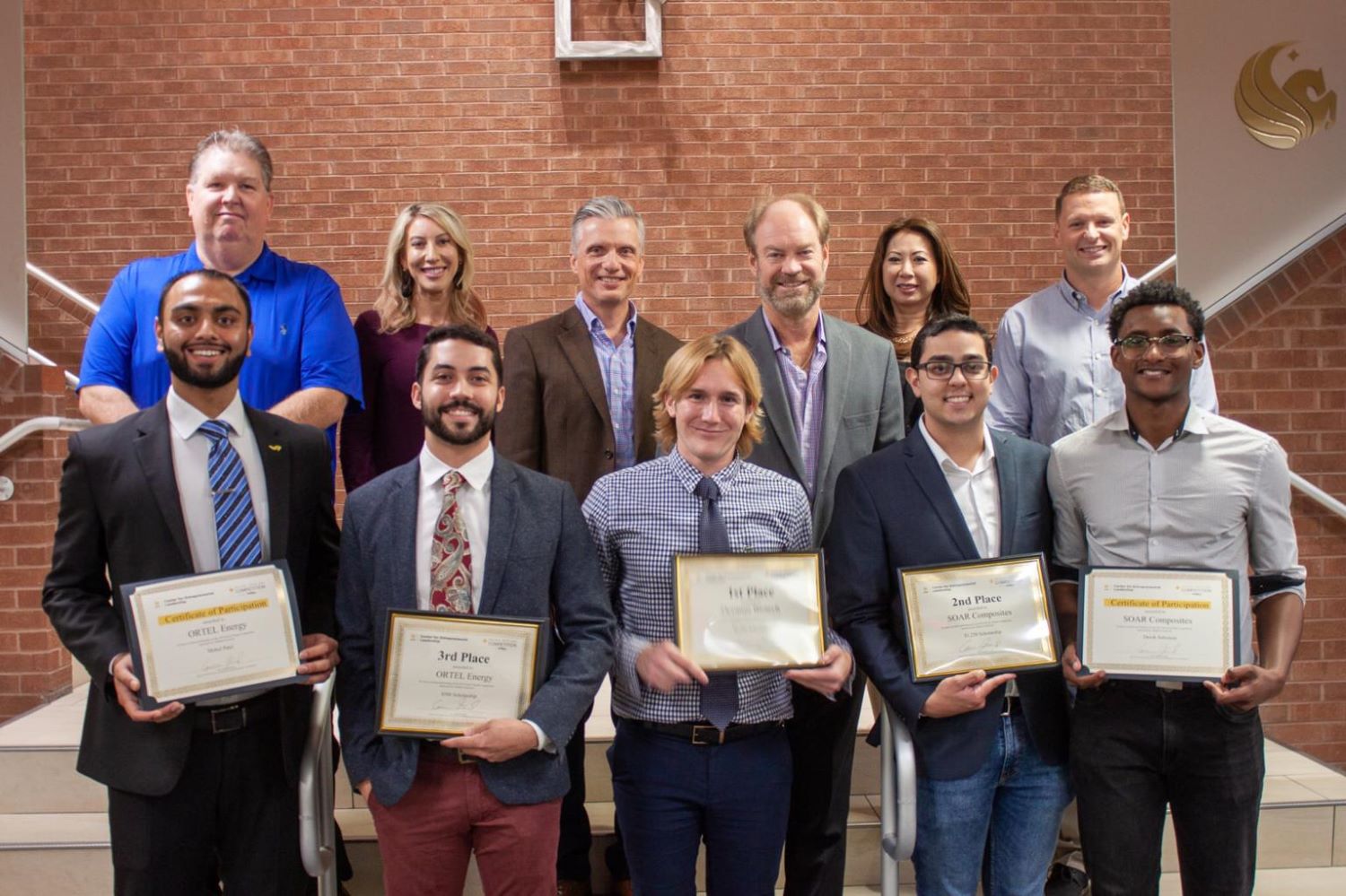
It all began at the University of Central Florida, where a group of engineering students, among them Derek Saltzman and one of his co-founders Mason Mincey, first crossed paths. As aerospace engineering majors, they bonded over a shared passion for building and creating, often teaming up for various engineering competitions.
One day, while passing by the UCF Blackstone LaunchPad, they noticed a flyer for a business-building competition. Curious and confident in their technical skills, they thought, “Why not give this startup thing a try?”
That decision sparked their first entrepreneurial venture. They dove into manufacturing carbon fiber components—specifically, advanced carbon fiber made from polyacrylonitrile—for the emerging world of drone racing.
This was during the height of the FPV drone craze, where pilots donned goggles and raced high-speed drones through complex courses. The team produced carbon fiber chassis for racing drones and sold them to pilots and companies alike, learning the ropes of distribution and manufacturing—all from their garage.
They stayed in that market for over three years, but eventually hit a ceiling. While it was fun and hands-on, they realized they were essentially building toys. They wanted to do more—to make a broader, lasting impact. That’s when they pivoted.

As recalled by Derek Saltzman in an interview with GreyB, CEO of Soarce, “So we kind of went back to the drawing board, and at the same time we were kind of advancing on our degree program at the university, ended up switching into material engineering or material science, and that’s actually where we fell in love with—okay, instead of trying to combine fibers and glue (which is essentially what a composite carbon fiber is), we decided to kind of go down even a layer deeper—a layer deeper—and say, ‘Can we manufacture the fiber ourselves?’”
This curiosity led them into the world of biocomposites and biomaterials. They became fascinated by the potential of natural materials, particularly in how they could be transformed into high-performance fibers. This exploration marked the beginning of what would become Soarce.
“And that’s kind of what led us down the rabbit hole of looking into biocomposites and biomaterials, where we started to utilize these biomaterials to actually spin our own individual fibers. And that’s kind of where we got our first, I’d say, push or shift into this direction of using biomaterials for textile and fabric applications,” said Derek Saltzman.
Pivoted Their Way to Seaweed Chemistry
Initially, during their time in the Adidas Legacy Accelerator, they focused on developing a single-filament fiber using proprietary chemistry. But they quickly ran into the reality of the textile industry: the scale needed for prototyping was far beyond what a startup could handle.
They then shifted to creating a bio-based leather, competing with companies like NFW and MycoWorks. But again, they hit a wall—realizing they weren’t a leather company, but a materials innovation company with a unique chemistry platform.
The breakthrough came at the Biofabricate event. While showcasing both their leather and raw chemistry, it was the chemistry that caught the attention of industry players. Companies facing challenges like fire resistance and UV protection saw real value in their seaweed-based solutions.
From there, Soarce made a final pivot—fully embracing their role as a chemical innovation company, creating functional additives from seaweed for use across textiles and fashion.
“There’s been a series of pivots that have kind of gotten us to our core competency, which is what we do today,” he stated.
He added, “And it just, again, it takes time and you figure that out. Like I said, there’s no rule book on how to build it — you kind of just, as you’re working with your clients and the customers that you work with, they kind of steer you in the direction of like, ‘Hey, we have this really big problem and you have a solution that can solve that problem.’”
How Does Soarce Tackle the Challenges of Bio-Based Materials
There are a lot of challenges in making bio-based materials work, but Soarce has found a way to solve them step by step. By focusing on smart science and listening to what customers need, they’ve built a product that overcomes the usual problems like cost, durability, and scaling.
Performance First!
Soarce’s products attract businesses primarily because of their strong performance. Many companies focus first on how well a product works, and Soarce offers solutions that meet those demands.
For example, they provide a white color that doesn’t yellow over time and doesn’t rely on common ingredients like titanium dioxide or zinc oxide, which can cause issues.
Not only do these materials perform well, but they also offer companies a way to connect with customers who value sustainability, making Soarce’s products both effective and marketable.
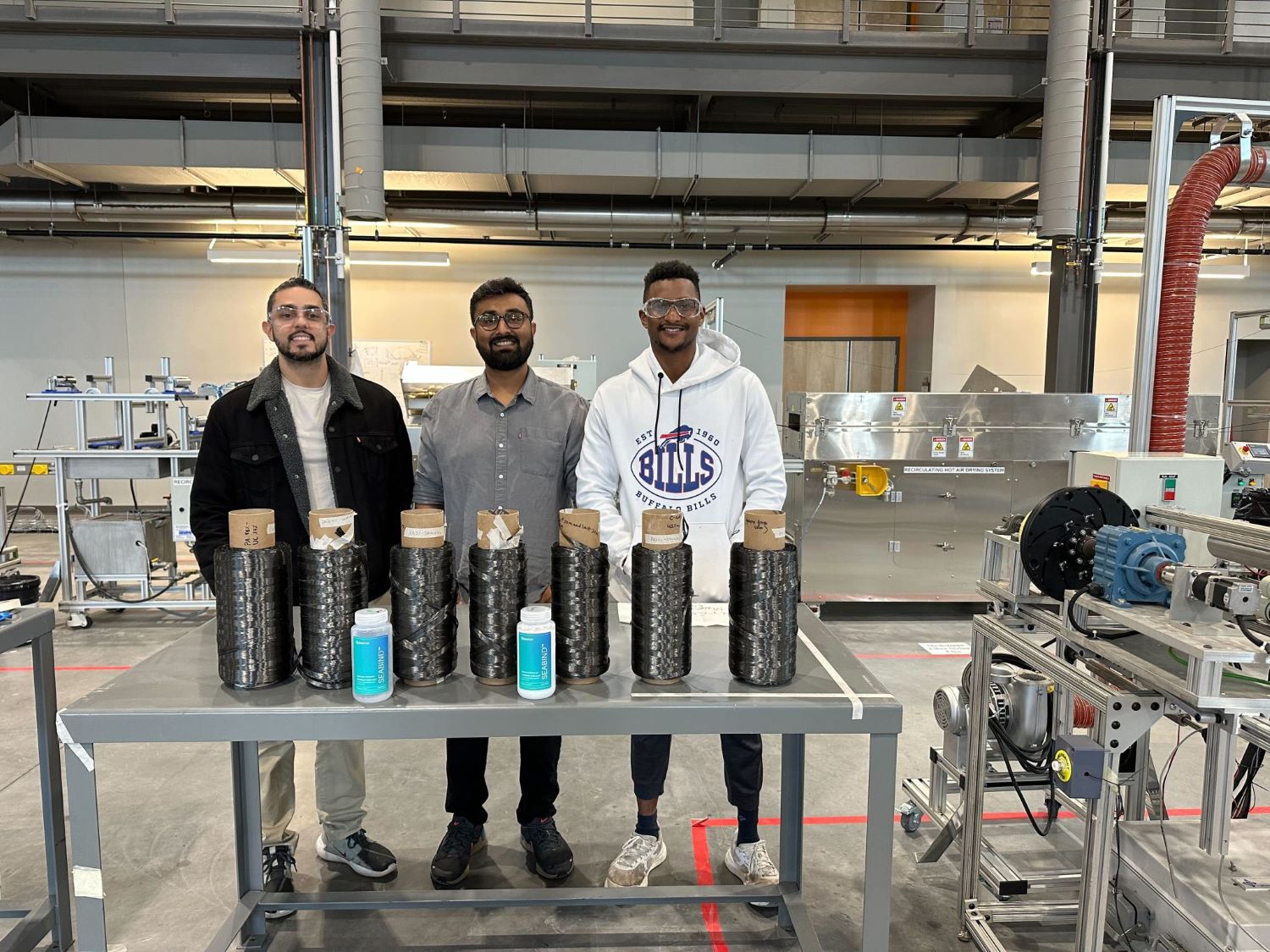
“So the thing that’s really interesting about us is—we’re able to get these performance properties, like UV shielding, fire protection, and all that, while still utilizing a biobased product,” Derek stated.
To do this, Soarce extracts key biopolymers from seaweed, including fast-growing types and even invasive species like sargassum. Then they apply their own proprietary, non-toxic chemical treatments to these natural materials. These treatments—called functionalizations—give the biopolymers specific performance properties. For example, the materials can help protect against UV light, reduce water use in textile dyeing, or improve fire resistance.
They’re also applying their materials beyond textiles. One example is using their seaweed-based polymers as a natural replacement for acrylic binders in paint, offering a cleaner, safer alternative for use in coatings. Their materials also work as viscosity modifiers, pigment binders, and optical brighteners—which are all important in paints, coatings, and textiles.
As shared by the CEO, in Europe, there’s growing pressure to phase out toxic chemicals—especially halogenated, brominated, and phosphorus-based fire retardants—which are common in textiles and furniture and often come into contact with skin. Soarce’s seaweed-based materials offer a cleaner, safer solution that still meets strict performance standards. This positions them well as companies move away from harmful chemicals on lists like ZDHC (Zero Discharge of Hazardous Chemicals).
Cost Saving
At the end of the day, most businesses make decisions based on the bottom line. It’s not just about how innovative or sustainable a product is—the key questions are: How much will it cost? And will the value it brings be worth that cost? That’s something Soarce always keeps in mind.
According to Derek Saltzman, while Soarce’s materials may have a higher price per unit compared to traditional options—like petroleum-based binders—there’s an important context to consider. This slightly higher cost is partly due to what’s often called the “green premium” and the fact that Soarce is still a growing company that hasn’t yet reached the cost efficiencies of large-scale production.
But when you look at the bigger picture, many of Soarce’s customers are actually saving money overall.
That’s because Soarce’s materials help reduce costs in other parts of the production process. For example, they can lower energy consumption, reduce water usage during dyeing or treatment, and eliminate the need for expensive water treatment systems. These savings quickly add up, especially for large-scale manufacturers or those looking to improve their environmental footprint.
Soarce approaches pricing through a value-based lens. This means the company works with clients to understand not just the price of the product itself, but the total value it can bring—both financially and operationally. Even if the upfront cost is higher, the downstream savings in labor, utilities, and compliance with sustainability regulations can significantly outweigh that initial investment.
“A lot of the times, with the companies that we work with, we actually kind of work through something that we call value-based pricing or value-based costs—where yes, we’re a little bit more expensive up front, but on the downstream, again, you’re saving on labor, you’re saving on water consumption, you’re saving on specific energy needs,” he explained.
Derek added, “So in the long run, when you look at it from a full holistic picture, we’re actually saving some of these companies quite a bit of money on the back end.”
Supply Chain isn’t a Problem at Soarce
According to Soarce’s CEO, for any company that relies on natural raw materials like seaweed, managing the supply chain is a crucial daily challenge.
Soarce is fortunate because they have reliable supply partners in different locations (the UK and the Caribbean), and there’s plenty of seaweed available, sometimes even in excess. This helps reduce worries about running out of raw materials.
However, because different types of seaweed (like sargassum or brown algae) have different qualities and amounts of useful components (biopolymers), Soarce carefully controls quality to ensure their final product stays consistent regardless of the seaweed source.
Ultimately, they focus on having enough seaweed supply and extracting the right amount of biopolymer efficiently so their production matches their shipping needs without shortages or excess.
“So for us, it’s just making sure we have proper abundance, and we can extract the amount of the biopolymer that we specifically want at the required—let’s say—level. So like I said, some seaweeds have maybe 10%, some maybe only have 5%, so it’s just making sure you’re being calculated and making sure you have an efficient supply chain of stuff always coming in the door compared to what you’re shipping out,” Derek explained.
Soarce’s Growth Strategy in an Competitive Landscape
To thrive in this industry, Soarce has their own blueprint.
Build-to-Acquire
As mentioned by Derek, rather than trying to beat these companies at their own game—by spending more or building massive infrastructure—Soarce focuses on being faster, more agile, and more innovative. They develop unique technologies and protect them with patents, creating a kind of moat around their intellectual property.
He also points out that big companies, despite their resources, often struggle to commercialize new ideas internally. In contrast, startups like Soarce can move quickly and take bold risks.
Their long-term strategy, then, is to gain market share through innovation and speed, and eventually become an acquisition target—a company that larger firms would want to buy in order to access their market position and technologies.
He said, “For us, the way we look at it is: hopefully our IP strategy keeps us protected from them, and at the end of the day, we want to be an acquisition target for them. I mean, we don’t want to work — necessarily — we want to take market share from them at the end of the day and then in hopes and saying like, ‘Hey, to get that market share back, you’ve got to pay us a price tag of acquiring the company.’ And then they can bring that and develop it however they feel fit.”
Transitioned from Small-Scale Lab Production to Pilot-Scale Manufacturing
The next critical phase of growth for Soarce is transitioning from small-scale lab production to pilot-scale manufacturing. As of 2024, the company has successfully developed and tested its materials at lab scale—producing a few kilograms at a time—with encouraging feedback from early clients.
Recently, Soarce announced plans for a new manufacturing plant. The goal is to scale up production to approximately 100 kilograms per month in a pilot facility. This step is essential to demonstrate their ability to consistently deliver high-quality materials at larger volumes and to prepare for eventual commercial-scale operations.
This phase is crucial because it allows Soarce to optimize operations, troubleshoot inefficiencies, and refine their production process—what Derek calls “getting some battle scars.” Once this pilot phase is running smoothly, they aim to use what they’ve learned to build a full-scale commercial facility capable of producing materials by the ton.
“We want to really, basically, get our — I’d say — get some battle scars in that pilot facility to then move into a full-scale commercial facility, where we’d be doing about tonnage per month,” Derek stated.
Be Selective When Hiring!
According to Derek, they’ve been relatively lucky with hiring because they’ve been very selective about who they bring on board. They’ve heard a lot of “horror stories from previous entrepreneurs,” so one of the strongest advantages they have is “having a good entrepreneurial network” — people who have “been there, done that,” whether or not they are in the same market, they still offer “really sound advice.”
One key lesson from advisers in the Orlando community is to “make sure you know who you’re hiring.”
Derek emphasizes that their hiring process focuses on finding people who are open-minded and willing to learn, which is crucial since their startup requires employees to wear many hats—from lab work to customer interactions to equipment design.
He also stresses the importance of hiring individuals who are easy to work with, as startups often have ups and downs, and everyone needs to stay aligned and committed to the shared goal of commercializing the company and advancing their products.
“In a startup, things are crazy—you have a lot of ups and downs, good days and bad days—and everyone needs to understand that and row in the same direction. We all share a common goal, which is, of course, commercializing the company and developing the products further. I think everyone has a pretty good understanding of that, but it’s important to make sure that, day in and day out, everyone keeps that knowledge front and center and works together toward that common goal,” said the CEO of Soarce.
On a Growth Trajectory
Over the years, Soarce has made significant progress in its mission to revolutionize material science through clean chemistry and sustainable innovation. The company began as SOAR Aerospace in 2017, initially focused on carbon fiber drone frames. By 2019, inspired by advisor Meri Lundahl, Soarce pivoted toward bio-based nanomaterials, officially rebranding in 2020. This shift was supported by early validation, including a $50,000 research grant from the National Science Foundation (NSF) in 2021, which helped advance their R&D efforts.
In 2022, Soarce secured a $70,000 joint investment from LEAD and the Tavistock Group, providing critical early-stage funding to support product development and commercialization. The following year, Meri Lundahl formally joined the team as an advisor, reinforcing the company’s scientific leadership.
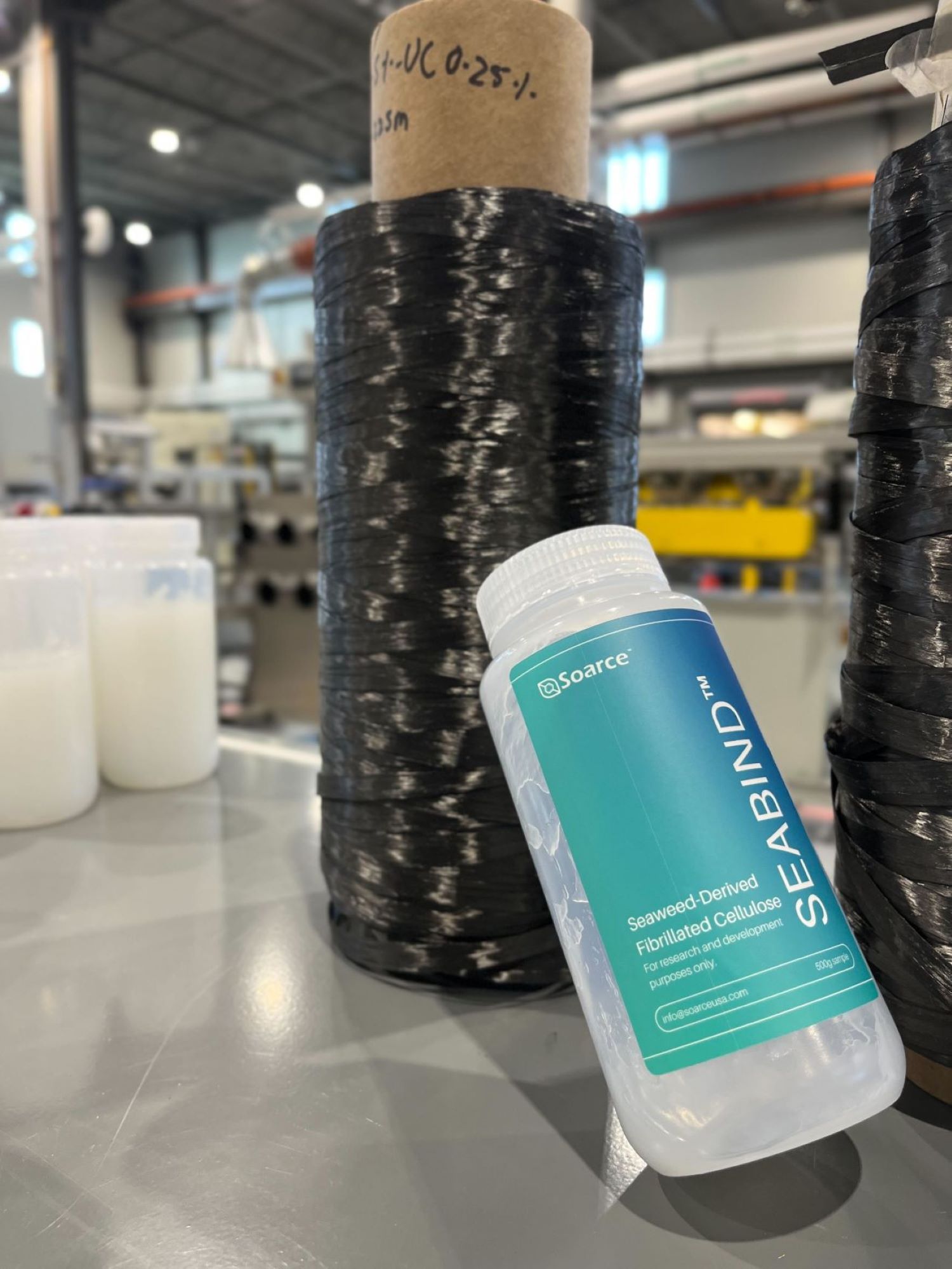
Soarce has also built a strong network of collaborators. In 2024–2025, the company partnered with the University of Maine’s Process Development Center (PDC) to distribute its Seabind™ Nanocellulose, a high-performance, seaweed-derived material now available to researchers and institutions.
Additionally, Soarce teamed up with Sevengardens, a global initiative promoting natural colorants, to co-develop The Dyer’s Child Ink Kit—a sustainable ink product that merges traditional plant-based pigments with Soarce’s proprietary TeraSolv™ chemistry.
Financially, Soarce has completed six funding rounds, attracting a diverse group of high-profile investors. These include Plug and Play, Creative Destruction Lab (CDL), LEAD, Founders Factory, and Boost VC—all of whom are known for backing innovative, impact-driven startups.