
Déjà Vu Diagnostics – Is Haemanthus Playing the Theranos Game Again?

The scandal of Theranos and Elizabeth Holmes had shaken the world of tech by revealing how a company valued at $9 billion could be built on deception.
Elizabeth Holmes is currently serving her prison sentence at Federal Prison Camp Bryan. She began her 11-year and 3-month sentence in May 2023 after being convicted of fraud and conspiracy related to the Theranos scandal. Due to good behavior, her sentence has been reduced to approximately nine years, with a projected release date of August 16, 2032.
After experiencing such a dramatic downfall, most people would abandon their ambitions entirely, but not Elizabeth Holmes. Even though she’s known around the world for her biotech scam that put people’s health at risk, she says she’s still working on new ideas and writing patents.
“There is not a day I have not continued to work on my research and inventions,” she said in PEOPLE’s exclusive prison interview in early 2025. “I remain completely committed to my dream of making affordable healthcare solutions available to everyone.”
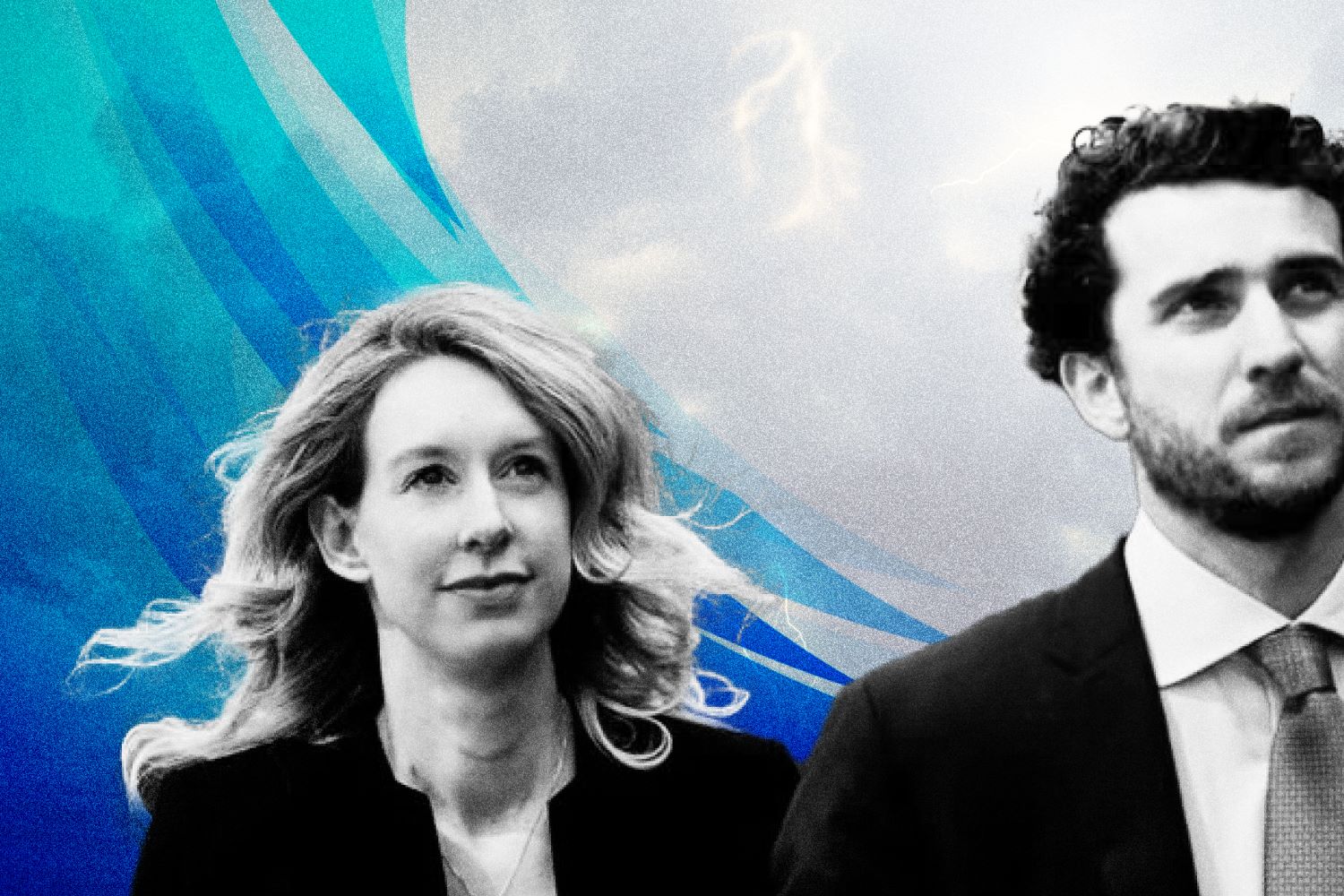
Although Elizabeth Holmes has said she plans to return to the healthcare tech industry after her release from prison, it appears her comeback may already be underway, just not under her own name. Her partner and the father of her two children, Billy Evans, has stepped into the startup world with a new venture that is raising eyebrows for its strikingly familiar mission. The company is called Haemanthus.
What is Haemanthus?
Haemanthus is a biotech startup launched by Billy Evans, the partner of convicted Theranos founder Elizabeth Holmes. The company is named after the Haemanthus genus of plants, commonly known as the blood lily — a symbolic and deliberate choice.
The name, which translates to “blood flower” in Greek, evokes both biological imagery and a poetic nod to blood diagnostics, the very theme that defined Holmes’s ill-fated venture. It’s a branding decision that seems to simultaneously signal a new beginning and hint at a controversial legacy.
Haemanthus claims to be developing a compact diagnostic device that can analyze small samples of bodily fluids — such as blood, saliva, urine, and sweat — to detect diseases. What differentiates it from Theranos is the use of a legitimate scientific technique known as Raman spectroscopy, paired with artificial intelligence.
Raman spectroscopy works by shining a laser on a sample and analyzing how light scatters in response. This scattering provides a unique molecular fingerprint, which can then be used to identify the presence of certain compounds, including potential disease markers.
While Raman spectroscopy has been used in research labs to detect cancers and neurological diseases like ALS, it is not typically used for rapid, real-time diagnostics. The process is slow, complex, and sensitive to environmental variables, often requiring skilled interpretation. Haemanthus’s innovation — or gamble — lies in applying AI and deep learning to automate and accelerate this process.
The company envisions a future in which this traditionally manual and niche scientific technique becomes the basis for fast, point-of-care diagnostics, all embedded in a sleek, accessible device.
Aside from the company’s ties to Elizabeth Holmes, Billy Evans himself lacks any formal background in medicine—his prior experience was at Luminar Technologies, a firm specializing in sensor technology for self-driving cars. To compensate for his limited expertise in healthcare, Haemanthus says it has brought together a group of roughly 20 advisers, including veterinarians and diagnostic experts, and currently has a staff of about 10 employees.
Why It’s the Right Timing for Haemanthus?
The timing may actually be ideal for a company like Haemanthus to emerge. That’s because artificial intelligence is rapidly transforming the field of diagnostics, including long-overlooked techniques like Raman spectroscopy.
Once considered too slow and complex for everyday medical use, Raman spectroscopy is now being revitalized by AI, which can process vast amounts of light-scattering data to accurately identify molecular signatures within seconds. This shift is turning what was once a lab-bound technique into a potentially powerful diagnostic tool for real-time disease detection.
Importantly, this isn’t just speculative. In recent years, leading scientists have made major breakthroughs using AI-enhanced blood testing. Dr. Victor Velculescu, a renowned oncology professor at Johns Hopkins, stated that a simple blood test—powered by AI—can now alert patients to signs of lung cancer, prompting early CT scans.
Considering that lung cancer remains one of the deadliest forms of cancer due to late detection, this development is potentially life-saving. AI is not only making diagnostics faster and more accessible—it’s also making them more accurate.
Even more relevant to Haemanthus is the success of combining Raman spectroscopy with artificial intelligence. In China, researchers at a leading medical university in Beijing have achieved remarkable accuracy using this exact combination: 99.7% accuracy in detecting melanoma and 97.9% for bacterial infections.
Similar findings are being replicated in the United States, signaling that this scientific approach is gaining global credibility. In short, the technical foundation that Haemanthus is building on is no longer fringe—it’s cutting-edge.
Haemanthus also benefits from favorable market conditions. There is growing demand for quick, non-invasive diagnostic tools that can be used at the point of care. Hospitals, clinics, and even veterinary practices are actively seeking alternatives to slow, centralized lab testing. Haemanthus’s device, if it works as claimed, could fit perfectly into that niche—especially given its small size and AI capabilities.
Targeting the Pet Industry First!
Strategically, Haemanthus is starting in the veterinary diagnostics market, a clever move that allows it to avoid the heavy regulations of human medical testing while proving out its technology in a real-world setting.
We have to admit that tarting in the veterinary diagnostics space is a savvy strategic move.
Unlike human diagnostics, veterinary testing is lightly regulated and faster to market. It allows the company to validate its technology in real-world settings while generating revenue. The global pet healthcare industry is booming, and animal diagnostics are already considered a multibillion-dollar, recession-proof sector. Success here could lay the groundwork for later expansion into human health applications.
They Still Have Backers Willing to Bet on Them
Given the company’s ties to Elizabeth Holmes and the shadow of the Theranos scandal, it’s no surprise that most major investors are steering clear of Haemanthus.
Michael Dell’s investment firm declined the opportunity, and a prominent venture capitalist—an early backer of Facebook—also passed, stating, “for many of the same reasons we passed twice on Theranos. In diagnostics, we’ve long held that the difference between a compelling story and a great company lies in scientific defensibility and clinical utility.”
Despite the widespread skepticism, Haemanthus is still managing to raise funds—just not from the usual Silicon Valley power players. Instead, Billy Evans began with a familiar fallback: friends and family. He has already raised around $3.5 million through personal connections and is actively seeking to raise a total of $70 million to bring the company’s vision to life.
According to internal documents, this funding is needed to develop the company’s AI-powered diagnostic device and eventually launch a wearable product for human health monitoring.
Currently, Evans is targeting wealthy circles in San Francisco and Austin in hopes of attracting high-net-worth individuals who are either sympathetic to the mission or intrigued by the high-risk, high-reward potential.
So far, The New York Times has identified only one confirmed investor—Matthew Parkhurst, a small business owner who helps run a tapas bar in Austin. He may not fit the mold of a traditional biotech backer, but his involvement underscores Haemanthus’s grassroots-style fundraising approach in the absence of institutional capital.
The Ghost of Elizabeth Holmes Still Haunts Haemanthus
even if the science behind Haemanthus is increasingly validated by outside research, the company is still overshadowed by the legacy of Elizabeth Holmes and Theranos. That legacy isn’t just a minor footnote—it’s a massive credibility hurdle.
Theranos wasn’t merely a failed biotech startup; it was a spectacular implosion that turned into a global cautionary tale, complete with criminal charges, media frenzy, and a Netflix documentary. Any health tech startup that even remotely resembles Theranos is bound to face intense scrutiny—and Haemanthus knows this all too well.

On May 11, 2025, the company took the unusual step of addressing the issue head-on. In a post on its official X (formerly Twitter) account, Haemanthus acknowledged the elephant in the room:
“Yes, our CEO Billy Evans is Elizabeth Holmes’s partner. Skepticism is rational. We must make a clear high bar. We prefer to build first, talk later. The science—when ready—will stand on its own merits. This is not Theranos 2.0.”
The post was unusually candid for a startup, but it reflects the company’s understanding that public trust must be earned slowly—if at all.
Still, the situation isn’t black and white. Despite the shadow of Theranos, there’s mounting evidence that what Haemanthus is trying to achieve—AI-enhanced Raman spectroscopy for diagnostics—is scientifically viable. In fact, other researchers and startups are already achieving promising results using similar methods.
Yet even promising science isn’t enough. Turning lab research into a scalable, regulatory-compliant commercial product is incredibly difficult. Many biotech ventures with sound science fail at the execution stage—tripped up by challenges in hardware development, clinical trials, or FDA approval.
For Haemanthus, the stakes are even higher. Because of its controversial backstory, it has almost no room for error. If it slips up even slightly, it won’t just be a failed startup—it’ll be remembered as “Theranos 2.0.” That’s why flawless execution isn’t just a goal; it’s a necessity.
Haemanthus Has Been Granted One Patent
According to records, the company was issued U.S. Patent No. 11,969,955 in 2024.
A patent is a legal right granted by a government to an inventor or a company, giving them exclusive rights to make, use, sell, or license an invention for a certain period of time—typically 20 years from the date of filing.,
The patent is titled “Optical Spectroscopy Systems and Methods” and relates to using Raman spectroscopy enhanced with AI to analyze biological samples—specifically for diagnostics, like detecting disease signatures in blood or other fluids. The system involves shining a laser onto a sample and interpreting the scattered light using machine learning algorithms.
While a single patent doesn’t guarantee technical or commercial success, it does show that Haemanthus is trying to stake an early claim in a high-potential diagnostic space. However, the fact that they’ve only secured one patent to date suggests they are still early in their R&D or IP strategy phase—and will need to do much more to prove their credibility and protect their technology from competitors.