
5 Game-Changing Small Businesses in Aerospace & Advanced Manufacturing

According to the Aerospace Industries Association (AIA), the U.S. aerospace and advanced manufacturing sector contributed more than $900 billion in total sales revenue in recent years, representing about 1.5% to 2% of the nation’s GDP.
The industry supports over 2 million high-paying jobs, with average wages approximately 40% to 50% higher than the national average. Exports of aerospace and defense products exceeded $130 billion, underscoring strong international demand for U.S.-made technologies.
Small businesses play a vital role in this ecosystem, comprising nearly 97% of aerospace and advanced manufacturing firms and providing over 60% of the parts and components used in commercial and defense applications.
Let’s spotlight five great small businesses leading innovation and growth in aerospace and advanced manufacturing.
From Bristol to the World: How Bauer, Inc. Became a Global Aerospace Leader
Located in Bristol, Connecticut – just 25 minutes from Bradley International Airport – Bauer, Inc. is a global leader in the design and manufacture of advanced test and support equipment for the aviation industry.
Operating out of a state-of-the-art 75,000-square-foot facility, Bauer serves both commercial and military aerospace sectors with cutting-edge solutions engineered for precision, reliability, and durability.
Bauer, Inc. has thrived under the visionary leadership of Lou Auletta, President & CEO, and Michael Auletta, Senior Vice President of Sales and Marketing
Lou Auletta has been with the company for over 40 years. During that time, he has built strong, lasting relationships with customers in more than 80 countries.
Michael Auletta joined the company 12 years ago. To help the business grow in Asia, he moved to Singapore. There, he introduced a direct-sales approach to connect more closely with customers in the region.
This personal, hands-on approach has worked well. In the last five years, exports have made up about 35% of Bauer’s total business, helping support 35 jobs in Connecticut. With help from SBA Export Working Capital loans and Connecticut STEP grants, the company has been able to offer flexible payment options to overseas customers and grow steadily in new markets.
Today, Bauer’s international partnerships span Singapore, Dubai, Serbia, and England, and the company maintains a full-time presence in Beijing. Their equipment supports essential aerospace systems across both commercial and military sectors, always meeting or exceeding international certification standards.

Beyond their commercial achievements, Lou and Michael are passionate about paying it forward. They actively mentor other Connecticut small businesses on entering global markets, offering practical advice and introductions to international networks.
By staying nimble, prioritizing strong global relationships, and maintaining an unwavering focus on customer support, Bauer, Inc. proves that a family-led manufacturer from Connecticut can thrive – and lead – on the world stage.
How a Veteran Leader Transformed EXB Solutions Into a High-Growth, Crisis-Proof Business
EXB Solutions, Inc. (Experience-Based Solutions) is a U.S.-based engineering services company with a strong track record of delivering high-impact systems and software engineering solutions for mission- and safety-critical applications.
With a Fortune 100 customer base and more than two decades of proven success, EXB is a trusted partner to leading organizations in the Aerospace, Defense, and Medical Devices industries.
Founded in 2000, EXB has grown from its early beginnings into a team of over 170 highly skilled engineers, bringing deep technical expertise and a passion for quality to every project.
When Chris Schwartzbauer first stepped through the doors of EXB Solutions in 2012, it wasn’t as CEO. It wasn’t even as an employee. He was a consultant – a veteran helping a small engineering firm figure out how to boost sales and refine its strategy.
But what started as a short-term project quickly became something much bigger.
Chris didn’t just consult – he connected. His approach, vision, and results quickly caught the attention of EXB’s ownership. Before long, they invited him to take the helm as CEO. The company needed fresh energy and bold leadership, and Chris delivered just that.
Under his guidance, EXB Solutions – a company that builds software and systems for critical aerospace, defense, and medical technologies – began to accelerate. Over the next several years, the company grew at an average 27% per year, fueled by strategic planning, innovation, and a commitment to excellence.
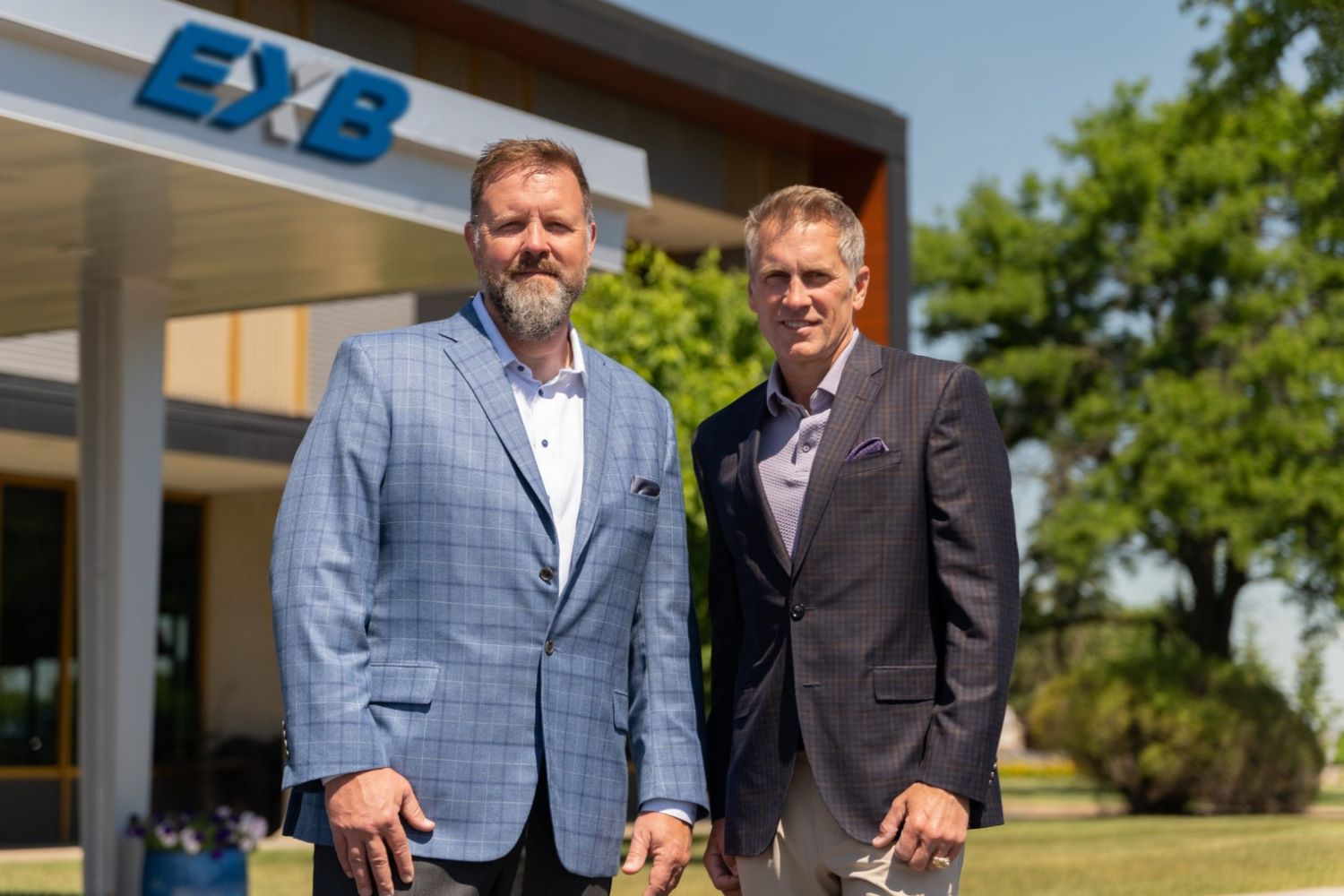
By 2018, the growth was undeniable – and so was Chris’s commitment. When the original owners approached him with the idea of taking full ownership, he didn’t hesitate. While he already held equity in the company, he turned to the SBA and Choice Bank to secure an SBA-backed loan to buy out the remaining partners and become the full owner of EXB Solutions.
The timing couldn’t have been better – or more tested.
Just two years later, the COVID-19 pandemic hit. A major project was suddenly paused, revenue plummeted, and the future looked uncertain. Like so many small business owners across the country, Chris faced an agonizing question: how to protect the company and its people in a moment of crisis.
He found his answer in the Paycheck Protection Program (PPP). The loan allowed him to keep his team of over 100 engineers intact – preserving talent, morale, and capability at a time when cutting back might have seemed like the only option.
Instead of shrinking, EXB pivoted. The team hunted for new business, stayed connected to clients, and focused on the long game. It worked. By the end of 2020, they had stabilized. Business was rebounding, and the company was turning a profit again.
Since Chris took over, EXB Solutions has grown by nearly 75%, adding high-tier clients and pushing the boundaries of what their engineers can do – from space missions to life-saving medical devices.
“In the last five years, we have achieved lofty milestone targets. These results have been delivered by a great team. The shutdowns due to COVID-19 had significant impact on our business, but the great engineers, office staff, and client-facing teams have rallied and re-established our position so that we are in great shape coming into 2021. We are now actively hiring to support our future growth plans in 2021 and beyond,” said Chris
Sydor Optics: A Family Tradition Lighting Up the World
For more than three generations, Sydor Optics has been quietly shaping the future—one carefully made lens at a time.
Based in Rochester, New York, this family-owned company makes custom optical parts used in everything from space telescopes to life-saving medical devices. The company uses the biggest collection of polishing machines, CNC machines, laser cutters, two clean rooms, and some of the best flat optics experts in the industry.
You might not have heard of them, but their work has touched the stars – literally. Sydor’s craftsmanship helped create the massive mirror for the Mt. Palomar Observatory’s 200-inch telescope, and their precision glass now travels aboard NASA’s Orion space missions headed beyond Earth’s orbit.
In 1997, Sydor’s leaders recognized they needed more space. With the help of an SBA 504 loan, they bought a bigger facility to expand their work. Over time, it became clear that the world was eager for their expert skills.
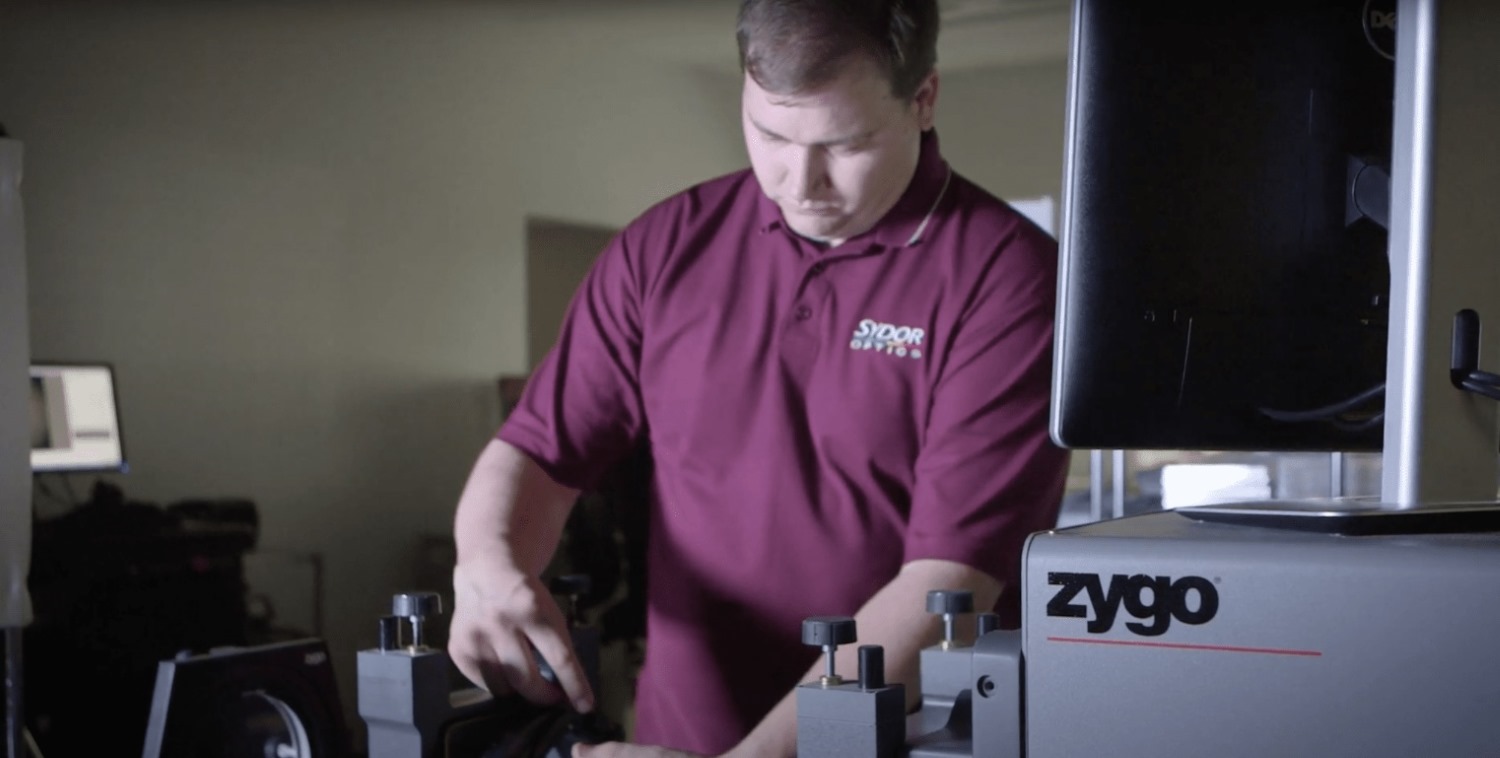
Looking toward international markets, Sydor used the SBA Export Working Capital Loan program to confidently take on global orders. But entering overseas markets wasn’t just about funding—it was also about building strong relationships.
That’s where the State Trade Expansion Program (STEP) helped. With STEP, Sydor attended big trade shows like Laser World of Photonics in Munich, Germany, opening doors to new opportunities and connections.
Matthew Sydor, Program Manager, shared that one meeting in Germany led to a trip to Israel, where their team met seven potential customers—a major breakthrough made possible by the SBA.
Now, Sydor is preparing for another big step. They are applying for more STEP funding to attend a global photonics show in 2024 and to train their team on international regulations—important moves to help them grow even more in overseas markets.
With 93 employees and growing sales worldwide, Sydor Optics shows that a family business from upstate New York can shine on the global stage – creating precise tools that help us explore, innovate, and heal.
Hidden Gem on Route 14: Vermont’s Cutting-Edge Prototype Manufacturer
Along the quiet stretch of Route 14 South in East Randolph, Vermont, there’s a simple commercial building that might be easy to miss. This modest, more than 90-year-old structure is freshly painted and well kept – and inside, it’s home to one of Vermont’s most advanced manufacturers: KAD Models & Prototypes.
Even though its outside is simple and without signs, KAD has made a big mark in precision manufacturing. The company was named SBA’s 2022 Vermont Veteran-Owned Business of the Year and also New England Veteran-Owned Business of the Year.
Using advanced CNC (computer numerical control) technology, KAD creates detailed product prototypes for clients in industries like aerospace, consumer electronics, automotive, medical, and more.
Founder and owner Brian Kippen, a disabled Marine Corps veteran, highlights the company’s precision and flexibility. “If you can envision it, we can probably build it. The only real restriction is size,” he said.
KAD’s high-tech CNC machines can work with many materials like aluminum, steel, silicone, and titanium. They shape these materials into precise parts used in things like satellites in space and ocean buoys out at sea.
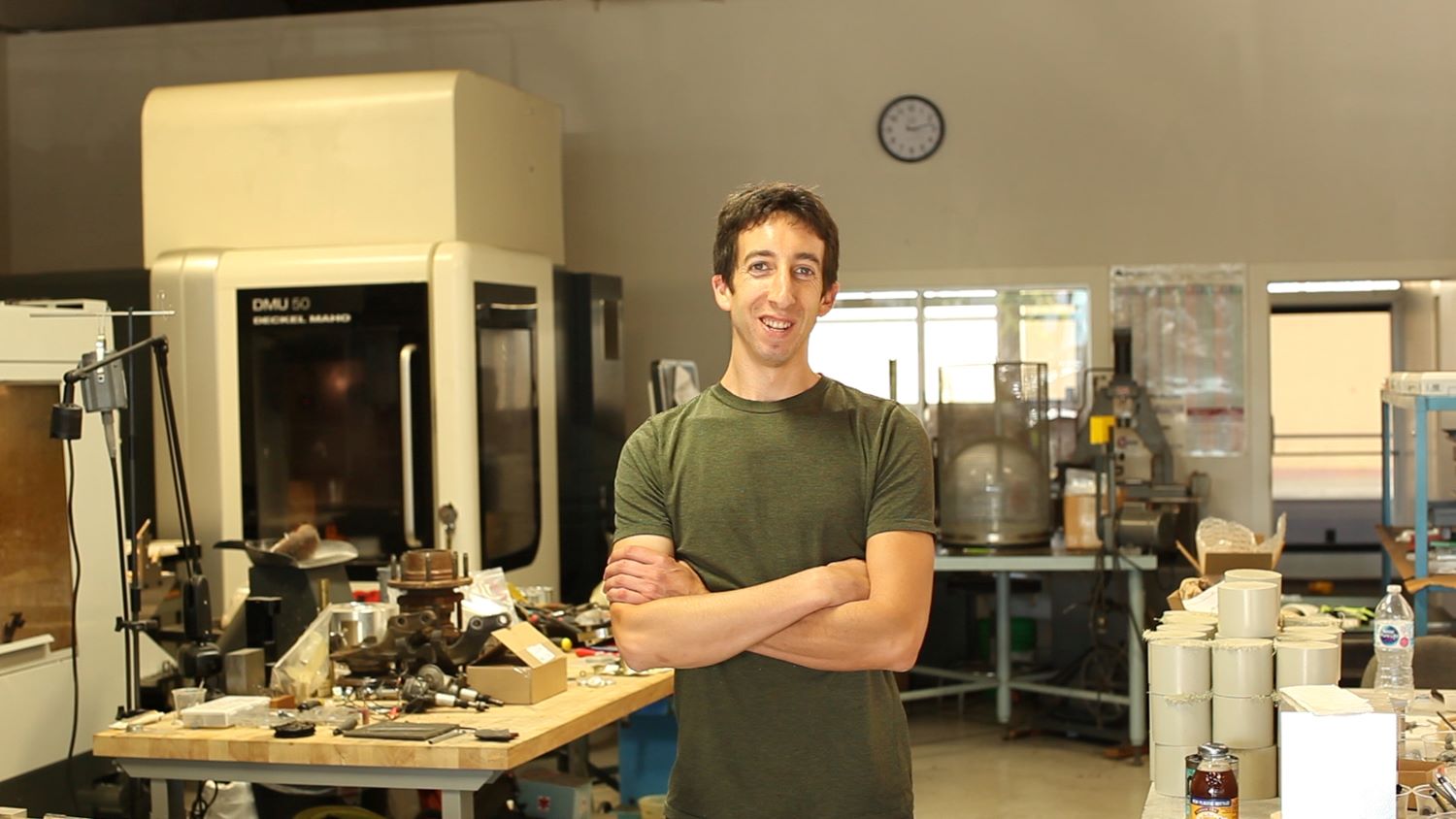
KAD began in Alameda, California in 2011 and has since produced over 3,000 prototypes for clients across the globe. Unlike many manufacturers who focus on bulk production, KAD’s niche is rapid prototype development – turning quotes around in just 24 hours, an agility rarely matched in the industry.
Although Kippen spent most of his adult life in California, returning to Vermont was always a dream. That dream took shape in 2019 when a friend tipped him off about the building on Route 14. After a year of addressing environmental challenges, KAD was ready to operate in East Randolph — just in time for the onset of the COVID-19 pandemic.
The pandemic brought its challenges. Initially not considered essential, KAD faced downtime but weathered the storm with help from the Paycheck Protection Program. Since reopening, business has surged, with more than half of KAD’s sales now coming from the Vermont facility.
KAD’s growth has also been a boon to the local workforce. The company employs 10 people, including three graduates from Vermont Technical College (VTC).
Kippen himself serves as an advisor to VTC’s manufacturing program and the Randolph Technical Career Center’s Advanced Manufacturing program. “One of our newest and youngest employees recently told me, ‘This is my dream job; I get to work with robots all day,’” Kippen shared with a smile.
Exquadrum, Inc.: Pioneering Rocket Propulsion and Space Technologies from the High Desert
Exquadrum, Inc. is a leader in advanced rocket propulsion and munitions technology. They work with the Department of Defense, NASA, and the commercial space industry.
The name “Exquadrum” is inspired by Latin phrases, reflecting our core philosophy that “Thinking Outside the Box” is embedded in thecompany’s DNA.
The company brings extensive expertise in both commercial and defense aerospace sectors, specializing in solid rocket motors, liquid rocket engines, and hybrid rocket motors.
Over the past 16 years, this innovative engineering company has grown into a trusted government contractor that handles every step of product development – from invention and design to building and testing.
Founded by lifelong High Desert residents Schmidt and Mahaffy, Exquadrum represents American innovation backed by the Small Business Innovation Research/Technology Transfer (SBIR/STTR) program. Their journey started in 2012 with an SBIR contract from NASA to develop advanced rocket propulsion.
This early support grew through more contracts, leading to a major $15.1 million prime contract to build a hypersonic boost glide delivery propulsion system—a clear sign of Exquadrum’s skill and dedication to advancing aerospace technology.
Besides, thanks to SBIR/STTR program, Exquadrum has been able to steadily improve its rocket and space technologies, gaining interest from leading government and commercial clients.
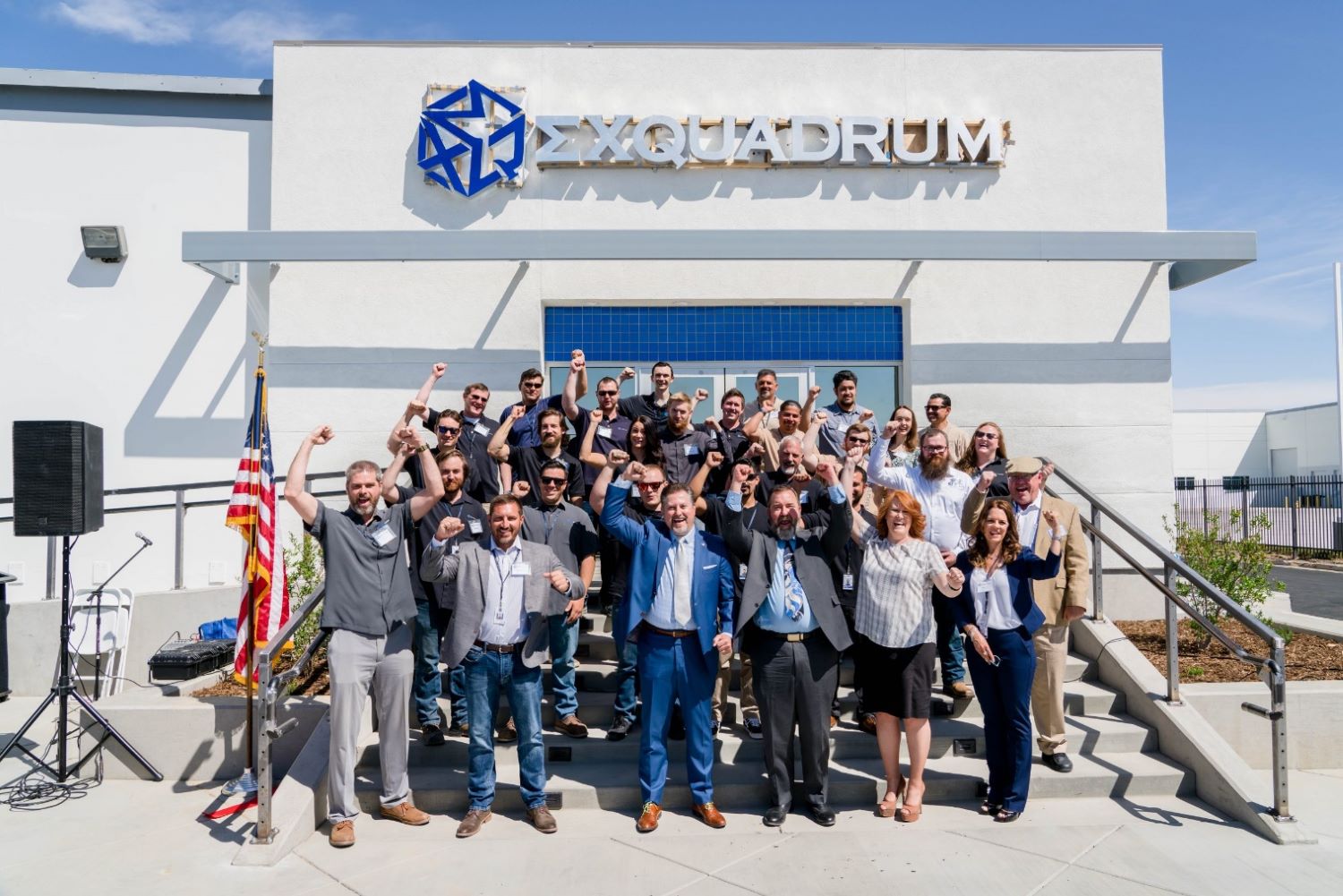
Exquadrum now employs nearly 50 people, led by a team with over 130 years of combined experience and 15 patents. The company recently expanded by leasing a 40,000-square-foot space at the Southern California Logistics Airport.
This new facility will bring together engineering, manufacturing, business, and lab work all in one place, alongside their existing rocket test site on the property.
Beyond its tech successes, Exquadrum and its founders stay strongly connected to their community. The company takes part in educational outreach and started a high school internship program, giving students real-world engineering experience.
Schmidt also supports education through leadership roles at Cal Poly Pomona’s Aerospace Engineering Action Council, the School of Engineering Dean’s Leadership Board, and as a former president of the Victor Valley College Foundation.
Over the years, Schmidt and Mahaffy’s visionary leadership has earned them several honors, including runner-up for the Orange County/Inland Empire Small Business Person(s) of the Year in 2013, the prestigious SBIR Tibbetts Award in 2014, and the Orange County/Inland Empire 2019 SBIR/STTR Grant Recipient of the Year.