
From Blue Collar to Government Contractor – How Did Kreig Houston Do That Without Prior Experience

Over the years, the landscape of government contracting has evolved significantly, creating a wealth of opportunities for both seasoned enterprises and ambitious newcomers. What was once considered a niche or highly specialized field has gradually become more accessible, thanks to increased transparency, digital platforms, and outreach initiatives aimed at diversifying the pool of contractors.
As a result, we’re seeing a growing number of inspiring stories—individuals who have taken the bold step of leaving behind the traditional 9-to-5 grind to pursue full-time careers in government contracting.
However, while the doors are indeed open wider than ever before, the government contracting space is highly competitive and demands a disciplined, strategic mindset to further grow in this space.
Those are the qualities that Kreig Houston, Senior Project Director at LSM Outdoor Power, embodies. Through his blueprint, he gradually transformed himself from a 9-to-5 employee into a full-time government contractor.
Kreig Houston – From a FedEx Driver to Government Contractor
Kreig Houston spent nearly 30 years in the transportation industry, working for several companies — including a long stint at FedEx. Meanwhile, his son, who had been in the lawn and landscaping business since age 15, purchased the company he worked for after the owners retired. Despite his son’s repeated efforts to bring Kreig into the business, Kreig initially declined, content with the stability and retirement benefits of his FedEx job.
But in 2017, Kreig finally made the leap. He began working in outside sales, focusing on commercial clients and municipalities. Around that time, an employee of their company helped get their business registered on SAM.gov, and government contracting began as a side pursuit while Kreig was still managing a retail store.
“I was managing a store, actually, and doing this on the side,” he recalled.
His company, LSM Outdoor Power, has carved out a specific niche in the government contracting space. Their focus is on equipment such as lawn and garden tractors, lawnmowers, utility vehicles (UTVs), and other farm and landscaping tools.
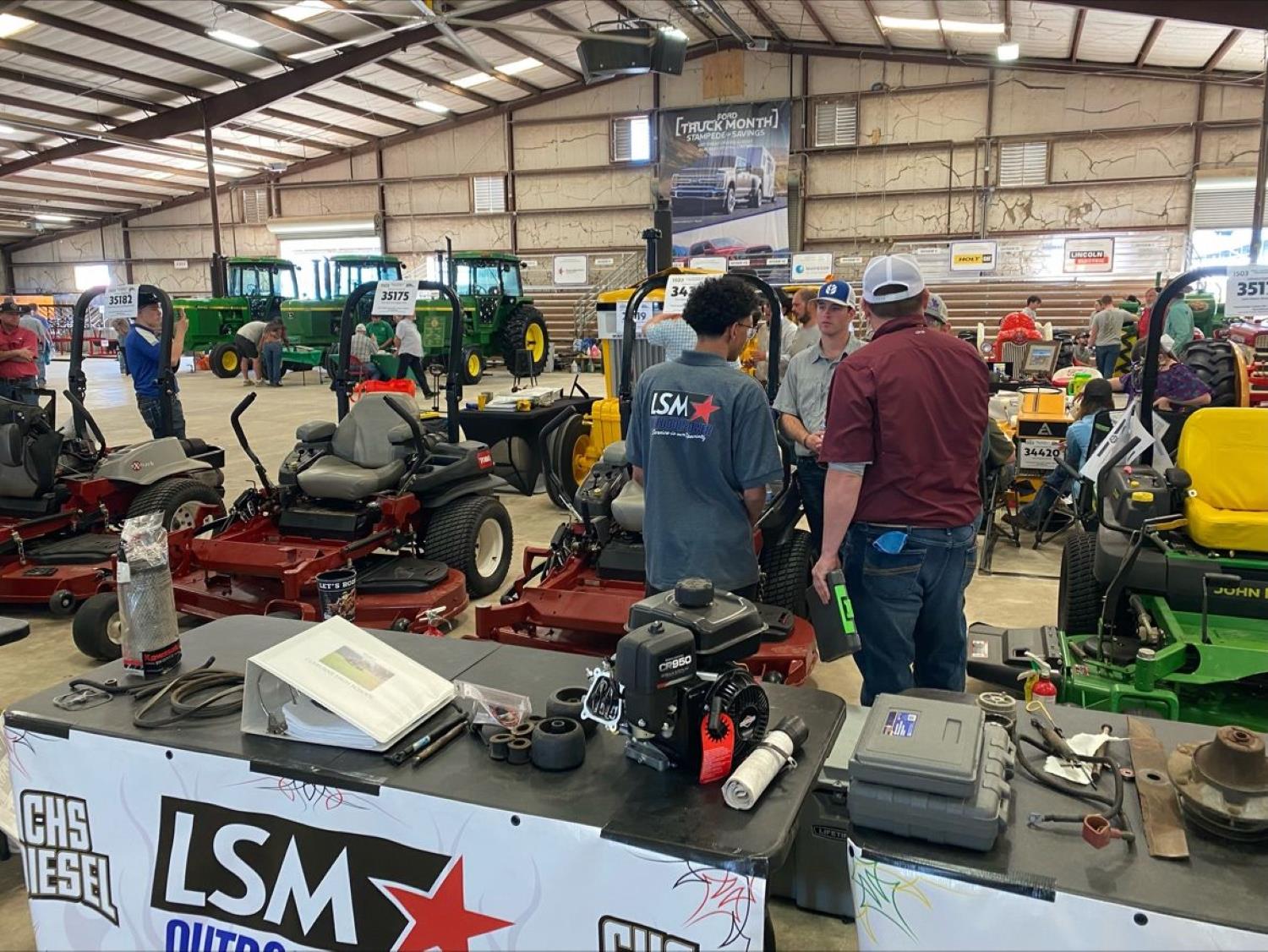
Their first breakthrough in government contracting came with a contract from the Texas Department of Transportation (TxDOT), which purchased side-by-side UTVs. This initial win marked the beginning of their journey in the public sector. Since then, they’ve secured several additional contracts with the state of Texas, proving their reliability and building a solid track record.
Kreig recalls their first federal-level win—a contract to supply a lawnmower to the War in the Pacific Memorial in Guam. Though the project was logistically complex, it was a major milestone that demonstrated their ability to handle federal requirements and long-distance delivery.
The most memorable contract for Kreig, however, was providing a lawnmower system to the Pearl Harbor National Memorial in Hawaii.
“Actually, my biggest contract was with the Pearl Harbor Memorial — they bought a lawnmower system from us. That was amazing. It was a lot of work. We did some teaming with another business in Hawaii to get that delivered,” he said.
As their reputation grew, major manufacturers began approaching them to sell their brands, which required floor plans, lines of credit, and steady financial growth – something they built up without investor backing.
Aside from selling equipment, Keig Houston’s next goal is to expand into monthly government landscaping and maintenance contracts. With years of industry experience and strong relationships with maintenance contractors, he’s confident in their ability to deliver reliable, ongoing services for local, state, and federal agencies.
Today, Kreig Houston has secured over $1 million in government contracts and expanded the business to five brick-and-mortar locations. Several major contract wins have positioned him to lead LSM Outdoor Power full-time — but getting there was no easy feat.
This Isn’t for the Faint of Heart
Before having the opportunity to transform into a full-time government contractor, Kreig Houston was juggling multiple responsibilities. By day, he managed a store for eight to ten hours; by night, he immersed himself in the world of government contracting. After dinner, he’d log onto SAM.gov, search for opportunities, and work on writing bids—often staying up into the early morning hours. There were nights when he submitted proposals at 1:00 a.m., just to meet a 6:00 a.m. deadline.
It was exhausting and unsustainable at times. Eventually, the workload became so heavy that he couldn’t keep up with all of it. There was a stretch when he had to pull back from bidding because it was simply too much to handle.
“So, there was a stretch — there was a while there — I wasn’t even able to do a lot of it, cause it was just too much. And then, uh, you know, we had some good contracts, some good bids — that’s how I started, got to full-time now. So, it was a struggle for a while,” Kreig Houston said.
Even when he was able to secure contracts, he acknowledged that the delivery part is much more dauting.
Kreig remembers being asked, “How are you going to deliver it?” With limited resources, he had to get creative. He took vacation days to personally deliver products, and a colleague stepped in during slower periods to help manage deliveries and client needs. They were figuring it out on the fly, doing whatever it took to make the operation work.
“Government contracting is definitely not for the faint of heart, that’s for sure,” he firmly stated.
Being a Small Business is a Silver Bullet
As shared by the director, his small business is able to sell products to government agencies, even though many of those products are made by large manufacturers that already have their own federal contracts (like GSA or TSA contracts).
The key point is that large manufacturers often can’t sell directly to certain agencies when the opportunity is set aside for small businesses—which is common under federal procurement rules meant to support small enterprises. Since Kreig’s company qualifies as a small business, he can buy the equipment from the large manufacturers and then resell it to the government under those set-aside contracts.
So even though the product is the same (like a mower or tractor), the agency still meets its small business purchasing requirement — by buying it through Keig’s business rather than directly from the manufacturer.

So, some of the stuff they can’t sell to the agencies — you know, National Park Service, whatever — that needs mowers and tractors, stuff like that. And they’re large businesses, and they can’t sell because they don’t meet the small business set-aside,” he explained.
It’s a smart, win-win strategy: the agency gets the equipment it needs, Keig’s company secures the contract, and the manufacturers still move their products — all while meeting small business requirements.
You Need to Proactively Research and Engage to Consistently Win Government Contracts
At first, like many new contractors, he turned to SAM.gov to look for opportunities.
When Keig Houston uses SAM.gov, it’s not just a quick browse—it’s a daily habit and part of his business rhythm. He’s built smart, advanced searches around his core NAICS code, 333112, so he can zero in on contracts that match his products.
Since SAM doesn’t reliably send alerts, Keig treats it like a morning routine, checking in every day.
If nothing shows up, he doesn’t stop there—he digs deeper, scanning other sections for hidden gems. Over time, this consistent hustle has helped him stay ahead of the game, even chasing down more complex bids like those from the State Department, which sometimes involve shipping equipment overseas.
“So, what I’ve done is I go in, put in the NAICS code — our main one is 333112. That’s a manufacturing NAICS code that covers a lot of products. There are a couple of others we use, but that’s the main one. I just go into SAM.gov, type that in, and that’s my saved search for every day. All I have to do is check my saved searches each day. If there’s nothing there, I can go back to the other portions and look through that as well,” he articulated.
SAM.gov can be a powerful tool for contractors to search for open contracts, however, Kreig quickly realized that in his niche – lawn equipment, tractors, and outdoor power gear, it requires a more proactive approach.
Besides utilizing SAM.gov, Keig learned by watching others in the space and paying close attention. He discovered the real power was in forecasting. He started spotting what agencies were planning to buy before the opportunities were even posted publicly. These days, he regularly checks agency forecasts, reaches out to contracting officers, and introduces his services and equipment.
He also uses tools like FPDS, where he tracks past purchases using NAICS codes to see which agencies tend to buy the products he offers. Then he sends emails, makes calls, and builds connections. It is steady work, but it keeps his sales pipeline full even when listings on SAM.gov are limited.
“I’ll go into FPDS, put our NAICS code in and see what they’ve sold to those agencies, send the contracting officers emails, the specialists,” he shared.
Kreig’s takeaway is simple. In government contracting, success rarely comes to those who wait. It belongs to those who put in the effort to go and find it.
He expressed, “You just have to stay on top of all that kind of stuff, because they don’t really drop in your lap too much.”
In addition to using government platforms like SAM.gov and FPDS to track opportunities, Keig also leverages LinkedIn to connect with contracting officers, build professional relationships, and stay engaged with potential buyers—an approach that has significantly supported his success in the government contracting space.
Kreig Houston’s Funding Strategy – Floor Plans and Local Banks Support
When it comes to funding, Kreig Houston doesn’t just rely on luck—he’s built a smart system that keeps his business moving even when cash flow gets tight.
One of his biggest advantages is using floor plan financing, which allows him to stock high-cost items like tractors, UTVs, and lawn equipment without having to pay everything upfront. He’s able to keep inventory ready and make payments over time, which gives him the flexibility to fulfill contracts quickly.
This model is especially useful in his line of work, where agencies often expect fast turnaround but payments can be delayed.
Kreig has also developed a strong relationship with a local bank, which has been a reliable funding partner whenever larger sums are needed to fulfill contract demands. Because of the trust and history he’s built with the bank, he can approach them for a loan and receive fair terms without jumping through hoops. It’s a rare position for a small business to be in—having both the manufacturer support through floor plans and the financial backing of a local lender.
We have a lot. Funding — a lot of our stuff actually is, you know, we have the floor plan advantage of having stuff in stock already. And so we get to make payments, you know, on the floor plan of products we already have in stock.
These tools have allowed Kreig to move forward on contracts with confidence, while others are still figuring out how to fund their bids.
“As far as that goes, we’re kind of lucky because we have that ability to go to the local bank or whatever. And plus, we make payments on the floor plan and stuff with our manufacturers, so that kind of helps us in a little bit of ways that some people don’t have as far as getting funding,” he stated.
Acquisition Can Help to Access Funding More Easily
When most people think about breaking into government contracting, they imagine starting a company from scratch — building everything from the ground up. But there’s another path, one that’s often overlooked: acquiring an existing business.
Whether it’s a small operation or a more established company, buying a business with a history can give you a crucial head start. Not only does it open doors to immediate contracting opportunities, but it also strengthens your position when seeking funding or lines of credit, since lenders often view companies with an operating track record more favorably.
According to Kreig, acquiring an existing small business can be a smart and strategic way to break into government contracting. He points out that this route not only gives you a head start with an operational structure and customer base but can also make it easier to secure funding, thanks to the business’s established track record.
Citing a friend who took this path, Kreig shares how that individual started with local county contracts, landed a major deal, and eventually expanded to 20 locations across the South. For Kreig, it’s proof that with the right foundation and opportunity, growth in this space can come rapidly.
“We actually had a friend that — he is in some local contracting with his county and stuff like that, you know, he does some of that. He just signed a pretty lucrative deal, and they’re going to franchise his business. And so they got like 20 locations in the South, and he’s been in it for quite a while. But it’s just crazy how that’s taken off for him. He’s really lucky in that respect,” he recalled.
You can Request Feedbacks When You Lose a Contract
Losing a contract in government contracting isn’t just a missed business opportunity — it can feel personal, especially when you believe you’ve done everything right.
“It kind of hurts when you lose them,” Kreig expressed.
However, one of the best parts of government contracting is that you can request feedback from agencies, allowing you to understand where you went wrong and how to improve for future opportunities.
In his debrief, Keig learned that the loss wasn’t actually due to the discontinued model he had submitted, which he originally assumed. The agency had other evaluation criteria that influenced their decision, and the feedback helped him understand those factors more clearly. This insight gave him a better perspective and valuable lessons to improve future bids.